Question |
Answer |
Which applications is the textured series used for? |
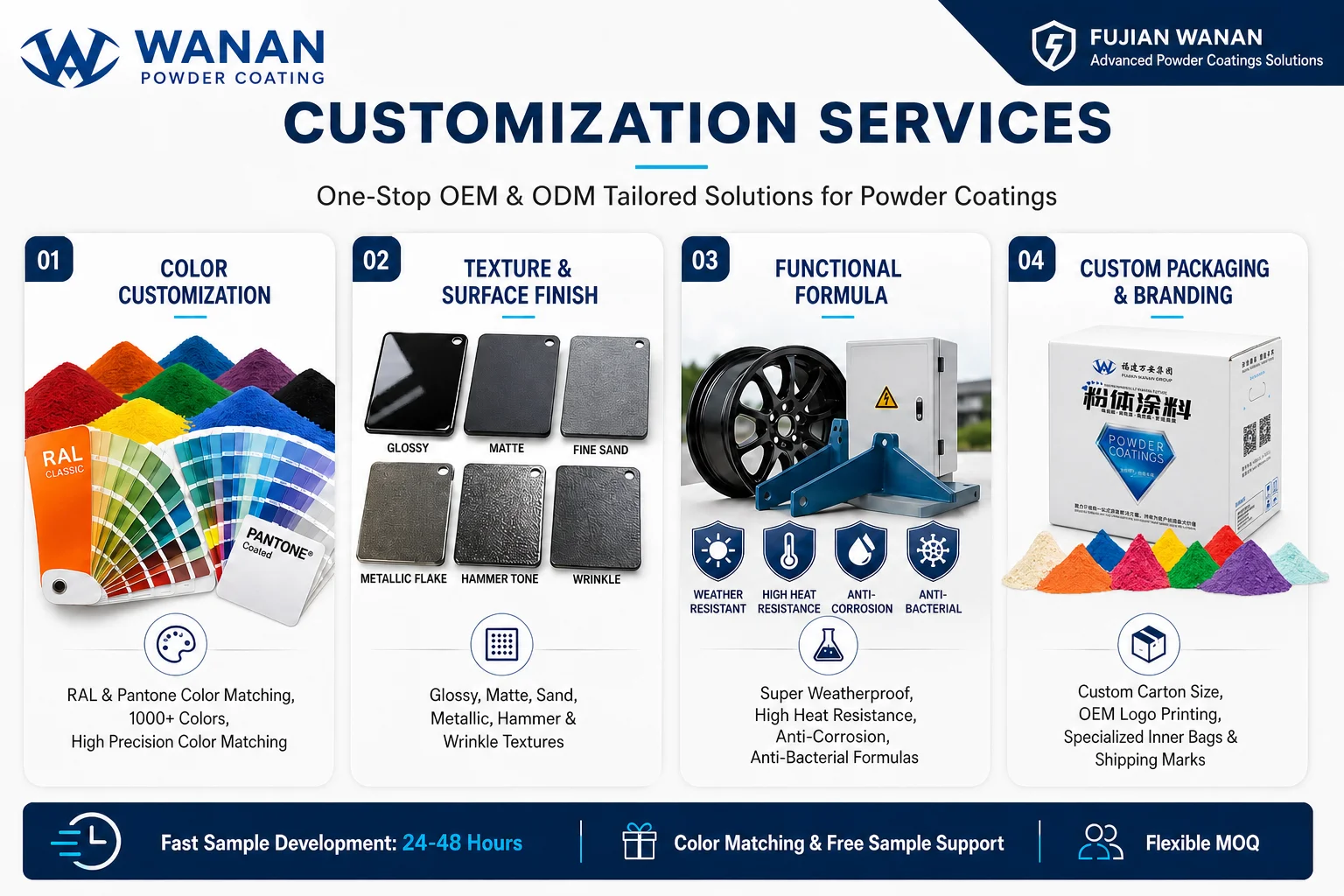
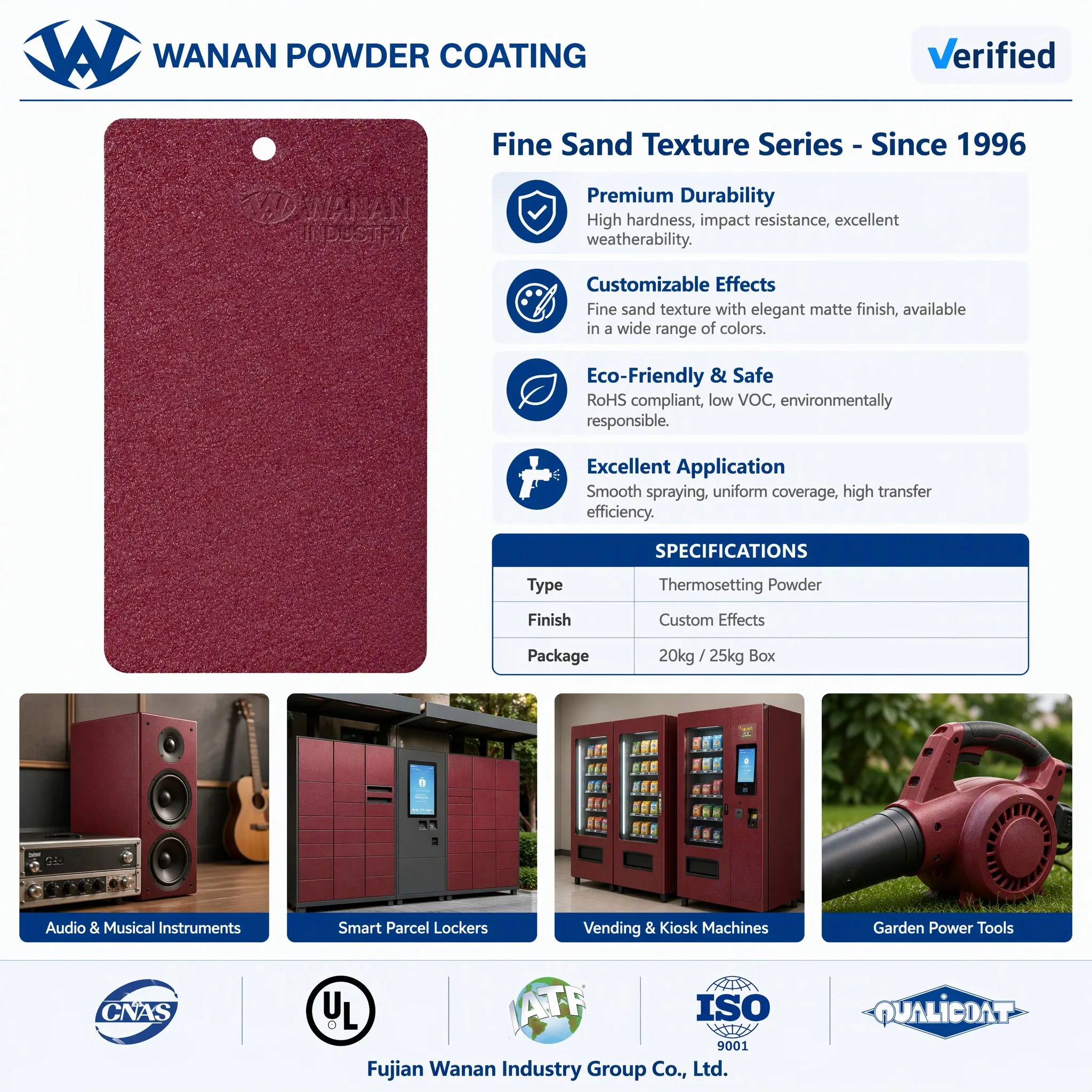
The series is a texture collection rather than an application-specific grade, so tell us the part first. Typical uses are metal housings, castings, furniture frames and enclosures - anywhere the substrate is not perfectly smooth and a gloss film would advertise it. |
How do I choose between fine sand and a deeper texture? |
Choose by what has to be hidden. Fine sand covers light grinding marks and keeps a product looking technical; a deeper structure covers welds, dents and casting porosity, but reads softer and holds more dirt on a part that is handled. Send a photo of the worst surface you need to cover and we will recommend a depth, then prove it on a sample. |
Can different textures be ordered in one shipment? |
Yes, each shade and texture is ordered separately from 200 kg, and several can be scheduled together. If they must arrive on one date, say so when ordering - multi-item shipments are planned, not assumed. |
Will a reorder look the same as the first batch? |
It will if the retained sample is used - that is what it is for. Texture is more sensitive than colour to film build and cure, so the same sample, the same film thickness and the same lot discipline are what keep a reorder consistent. Without a retained sample, no supplier can promise it. |
What test data comes with this series? |
Salt spray 1000 h (GB/T 1771, creep under 2 mm), humidity 1000 h (GB/T 1740), weather 800 h (GB/T 1865), adhesion grade 0 (GB/T 9286), pencil hardness 2H (ISO 15184), impact 50 kg.cm (GB/T 1732), bending 2 mm (GB/T 6742). |
What are the MOQ and packing? |
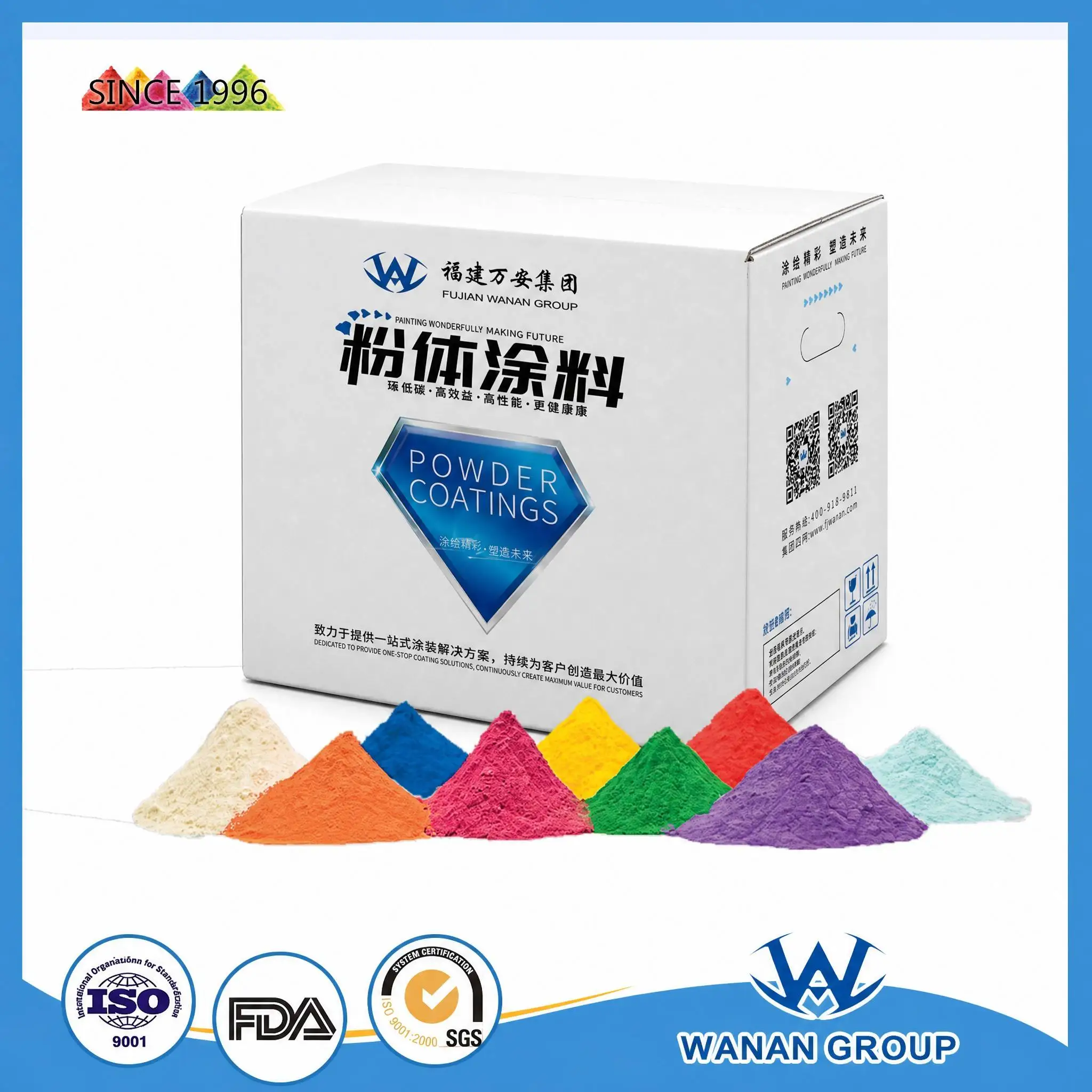
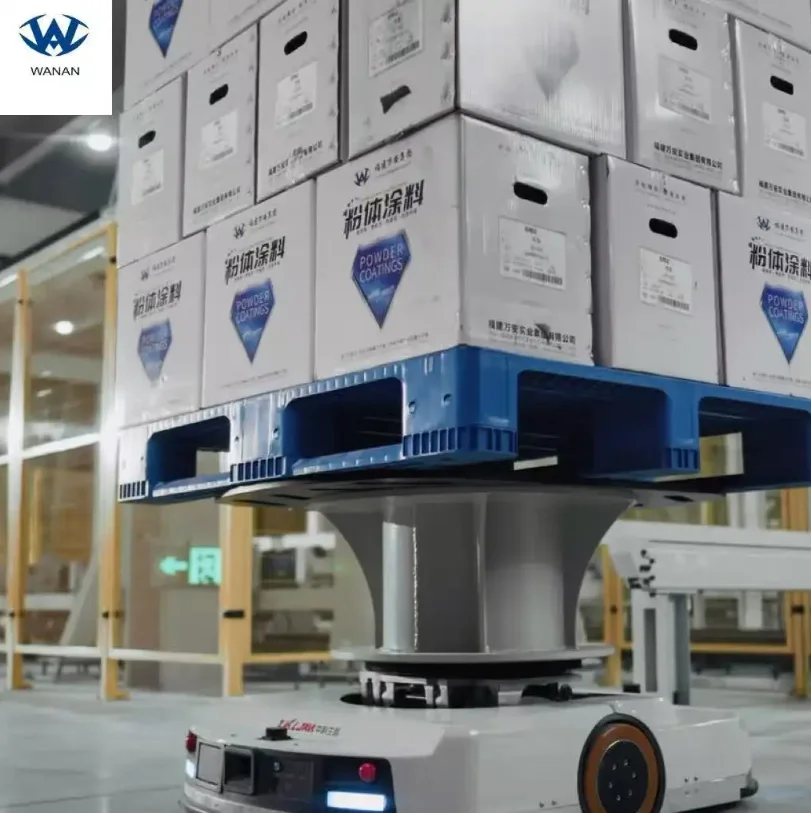
200 kg per shade, packed 20 kg or 25 kg per box with an inner liner, palletized for export. Neutral or OEM labels are available. |
Do the five textures share one colour range? |
They share the production standard, and colour is customized within it. That means a teal, a light grey and a black can be ordered as one family and will age on the same basis, which matters when several finishes sit on one product. |
What certifications back the product? |
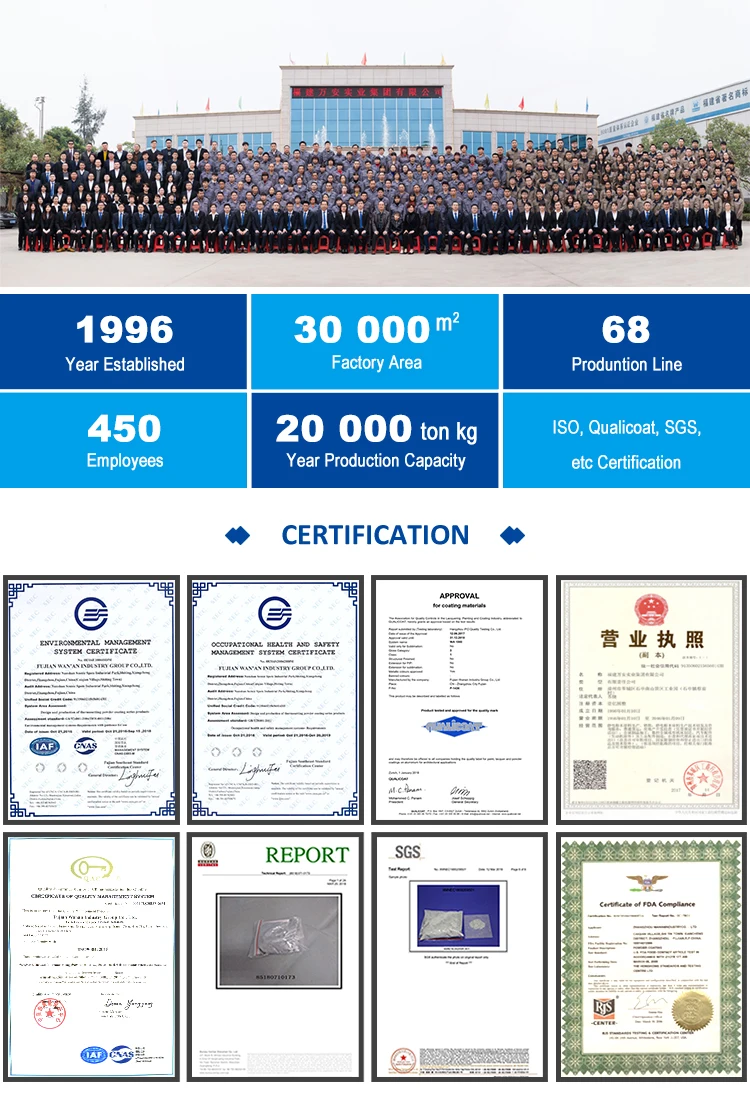
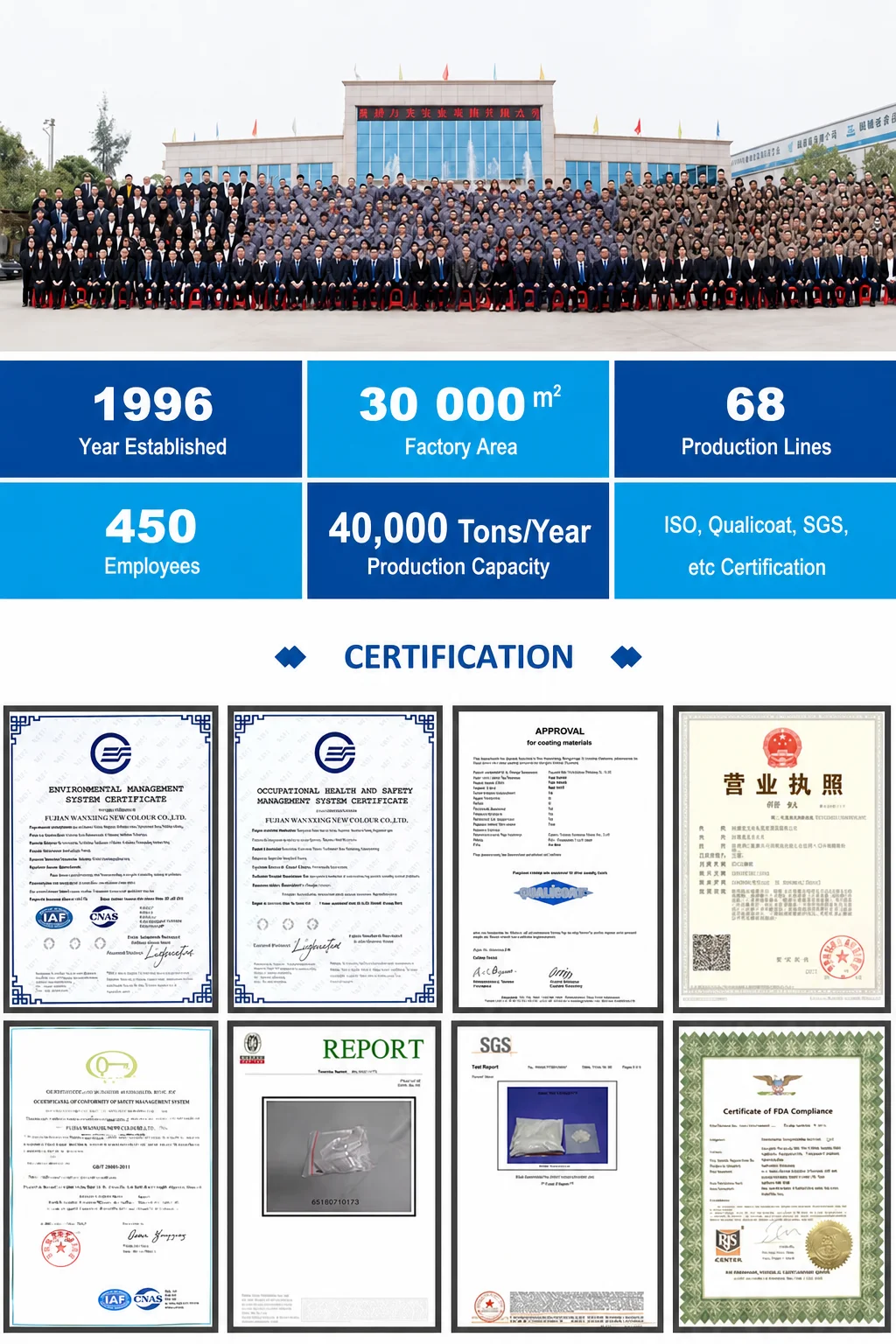
ISO 9001, IATF, UL, QUALICOAT and IAF, with a CNAS-accredited in-house laboratory. The company also took the lead in drafting HG/T 2006-2022, the industry standard for thermosetting powder coatings. |
Textured Powder Coating: Choosing a Depth by What Has to Be Hidden
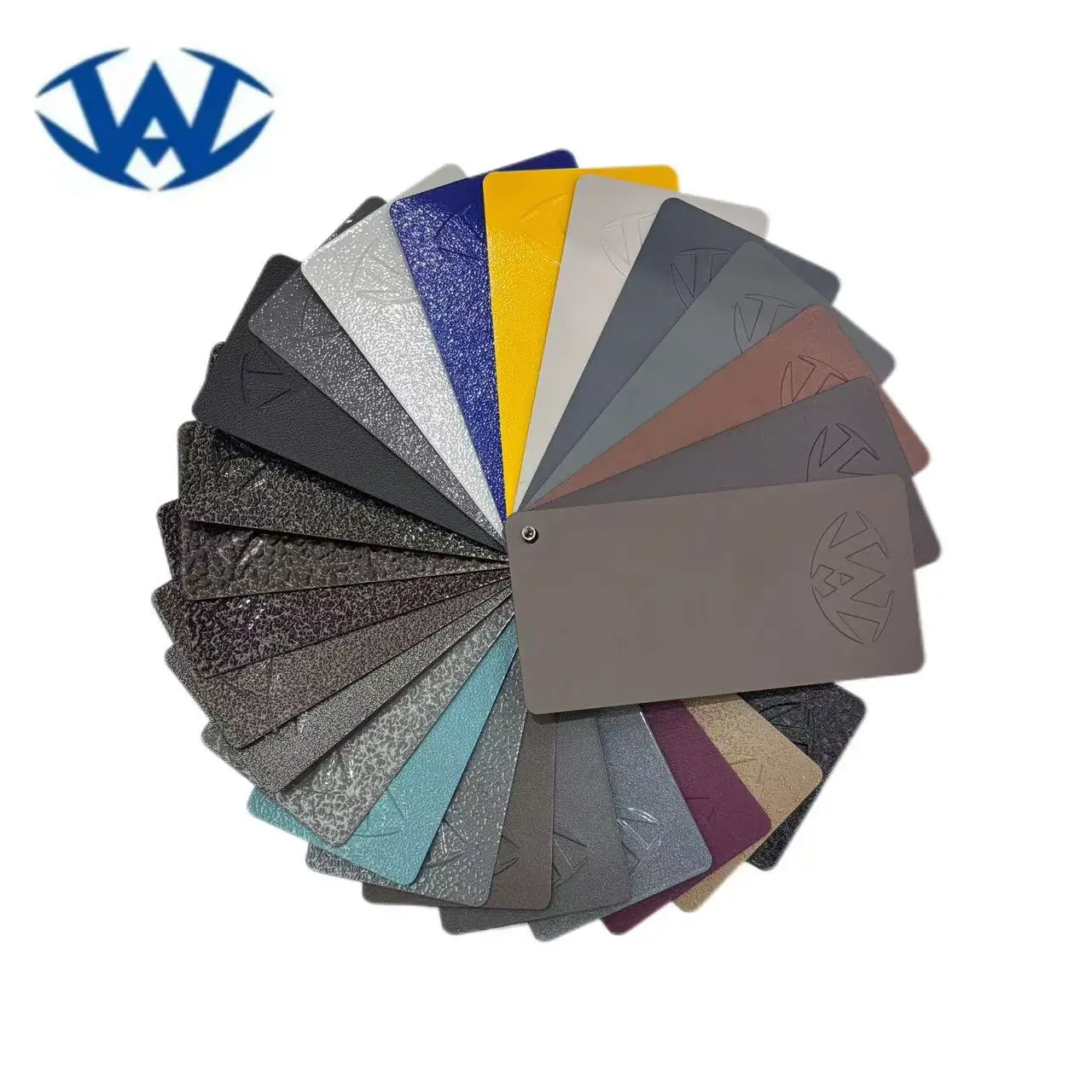
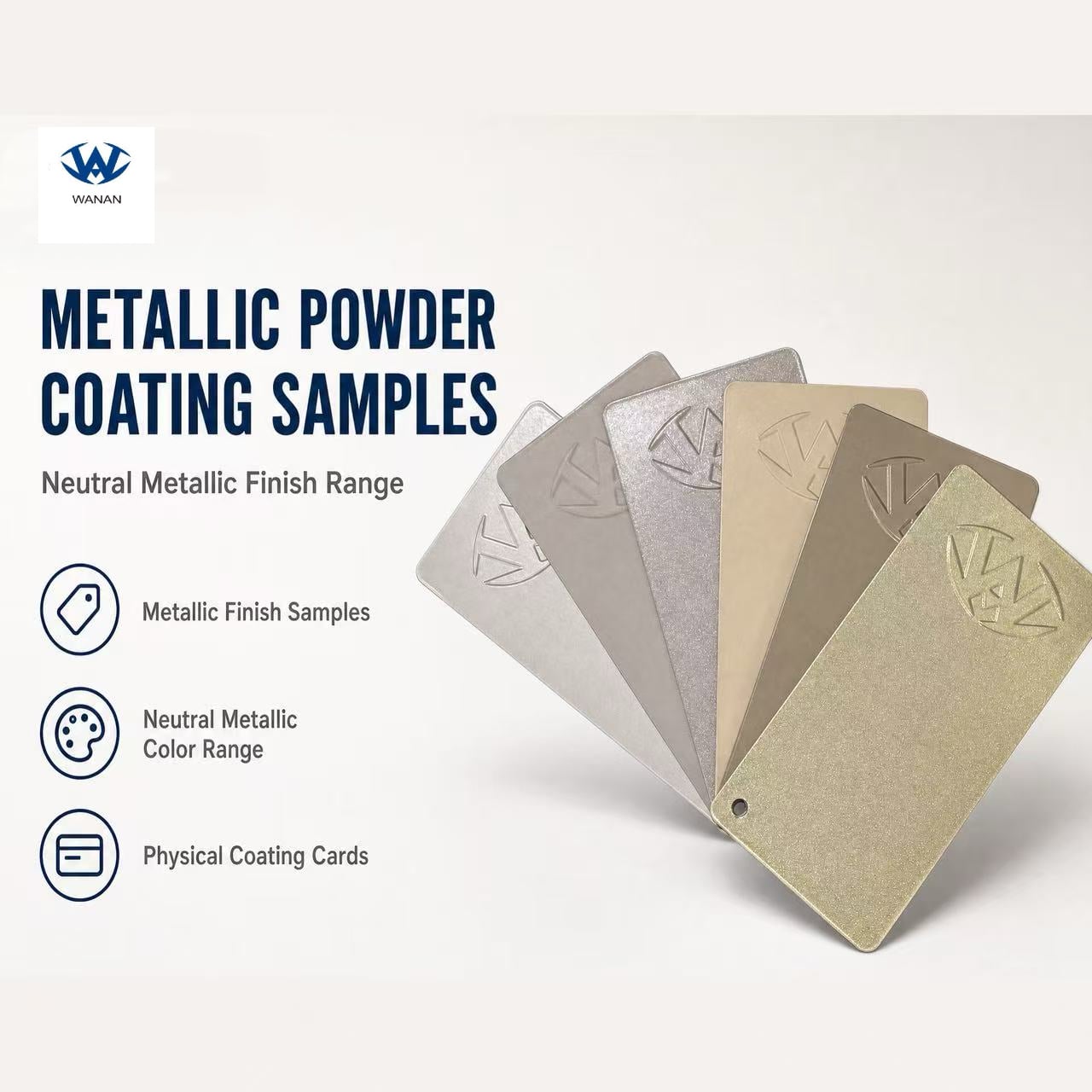
Texture is the only part of powder coating that cannot be fully described on a datasheet, because it is judged by eye and by hand rather than by an instrument. This textured powder coating series runs fine sand through to deep structure in five finishes, produced to one specification, in 20 kg or 25 kg boxes with a 200 kg minimum per shade. Every texture is approved on a coated sample at your production film thickness, because a texture judged on a printed card is always flatter than the film that arrives.
Texture Is Judged by Eye and Hand
A gloss film is measured in units; a texture is described in words, and words do not survive a production run. Film build, gun distance, cure profile and powder lot all move the grain, which is why two boxes of the same textured powder coating can look different if the line is set differently. The control is not a tighter word in the specification; it is a retained sample plus a lot number, compared before every shipment.
Choose a Depth by What Has to Be Hidden
Fine sand covers light grinding marks and keeps a product looking precise; medium grain covers weld dressing and small dents; a deep structure covers casting porosity and heavy weld beads, but reads softer and holds more dirt on a part that is handled daily. Choosing too fine means the substrate shows; choosing too deep means the product looks heavier than it is. This is a decision about your worst surface, not about the most attractive sample - a textured powder coating picked from a card is picked by the wrong criterion.
What the Numbers Cover
Salt spray 1000 hours to GB/T 1771 with corrosion creep under 2 mm. Heat and humidity 1000 hours to GB/T 1740, weather resistance 800 hours to GB/T 1865, adhesion grade 0 to GB/T 9286, pencil hardness 2H to ISO 15184, impact 50 kg.cm or more to GB/T 1732, bending 2 mm or less to GB/T 6742. Texture depth is not in that list, and it should not be: depth is confirmed on the sample, and the sample is what the batch is measured against.
Before It Ships
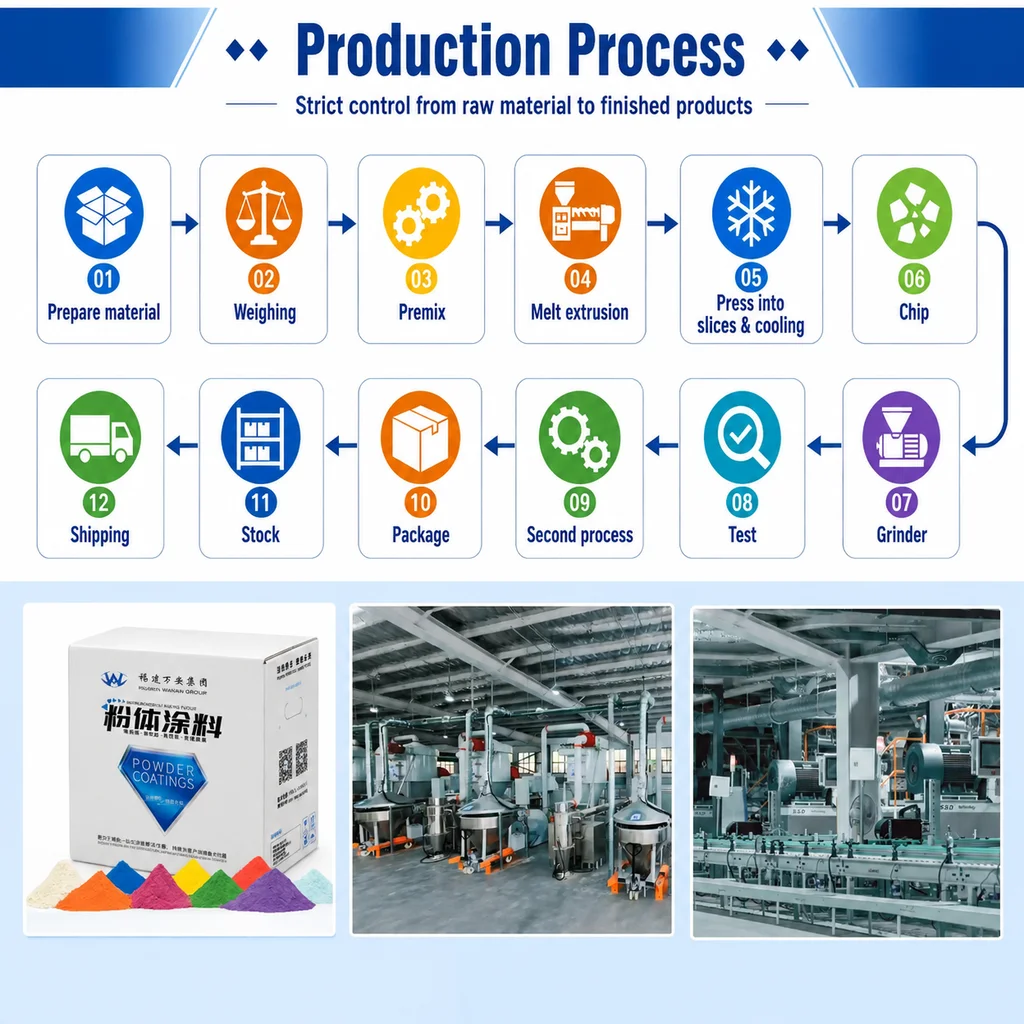
The approval sample is coated on your substrate with your pretreatment at your production film thickness, then retained as the standard. Every batch of textured powder coating carries a lot number and is compared with that sample before shipment. Standard shades leave about 3-5 days after payment is confirmed, packed 20 kg or 25 kg per box with an inner liner on export pallets, and several finishes can be scheduled to ship together if you say so when ordering.
Where the Powder Comes From
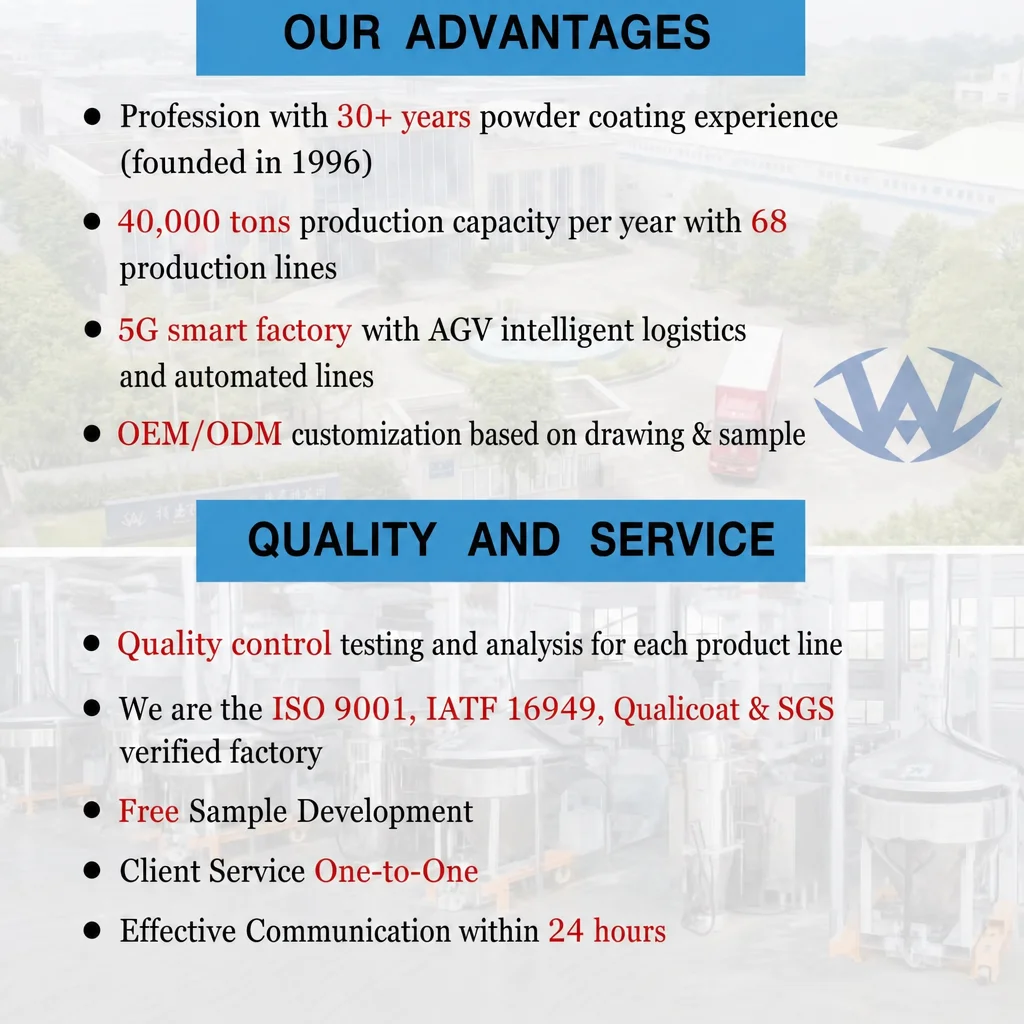
Wanan has manufactured thermosetting powder coatings since 1996 across 11 surface effect categories, with ISO 9001, IATF, UL, QUALICOAT and IAF certification, a CNAS-accredited in-house laboratory, and production bases in Fujian, Guangdong, Zhejiang, Shandong, Henan and Cambodia. The company took the lead in drafting HG/T 2006-2022, the industry standard for thermosetting powder coatings. Texture rewards that kind of experience more than colour does, because the last 10 percent of consistency is judgement, not measurement. It is also why a textured powder coating order is quoted with a sample rather than a code.
What It Saves You
The first saving is preparation time: a texture that matches the substrate's roughness replaces sanding that a gloss film would demand. The second is rejection for surface defects, because weld marks and porosity stop reading as defects. The third is the argument at goods-in, where a reorder is compared against a retained sample instead of against someone's memory of the first batch. Add per-order test reports and an audit stops being a document hunt. That is the case for one retained sample on every textured powder coating order.
How to Start
Send a photo of the worst surface you need to cover, the substrate and the film thickness you run. We recommend a depth, coat a sample at your thickness and send the test data with it. All the finishes are on www.wananpowder.com - and if you are unsure between two depths, ask for both samples in one parcel and judge them on the actual part.
 EN