EN


Advantage |
What it delivers for your project |
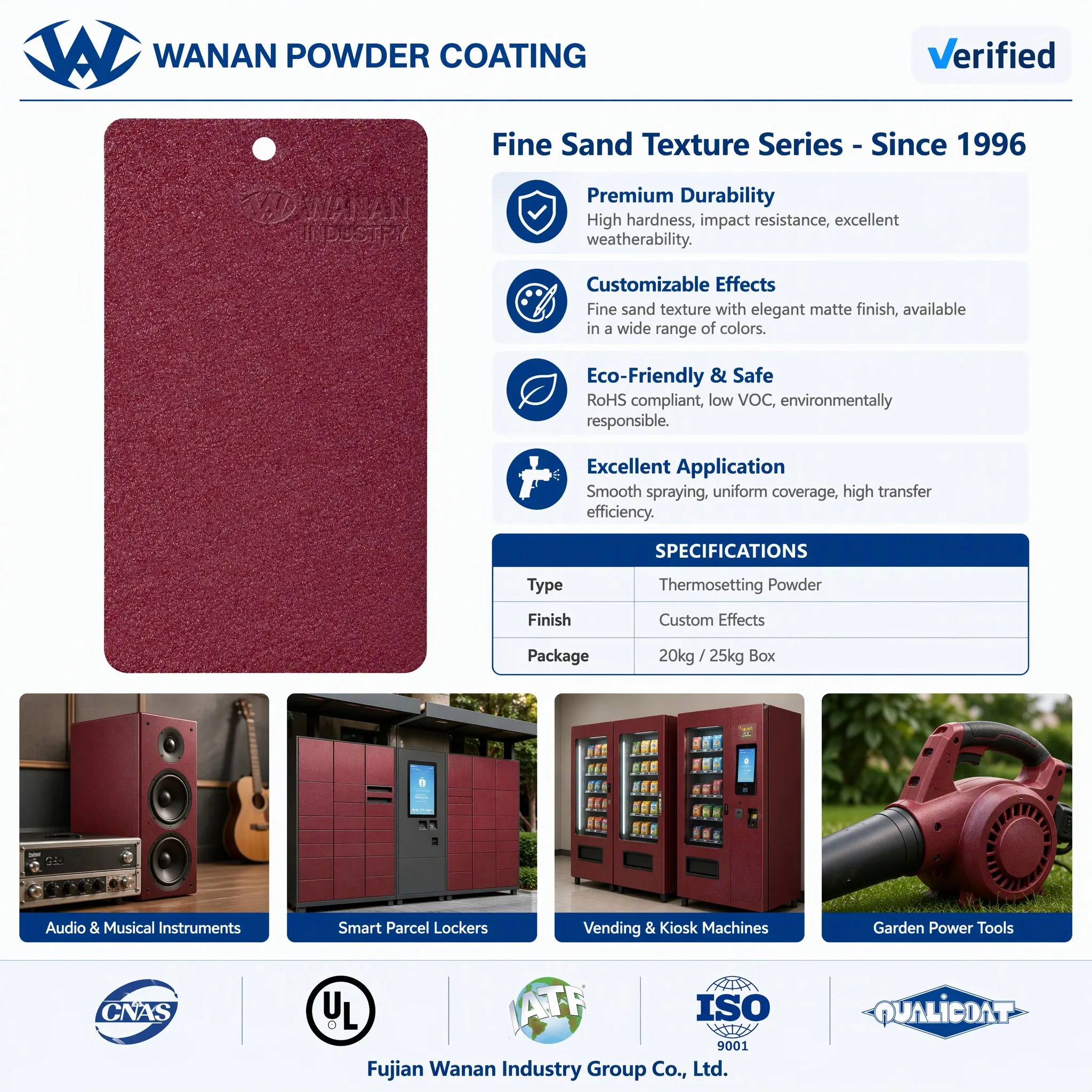
1000-Hour Salt Spray Protection |
Tested to GB/T 1771 at 1000 hours with corrosion creep under 2 mm, so parcel lockers, kiosks and garden tools hold their finish through wet, coastal and high-humidity service. |
2H Hardness, Impact 50 kg·cm |
Pencil hardness 2H, impact resistance 50 kg·cm or more, bending 2 mm or less and cupping 7 mm or more, so the film follows formed steel and aluminium without cracking. |
Fine Sand Grain, Even Matte |
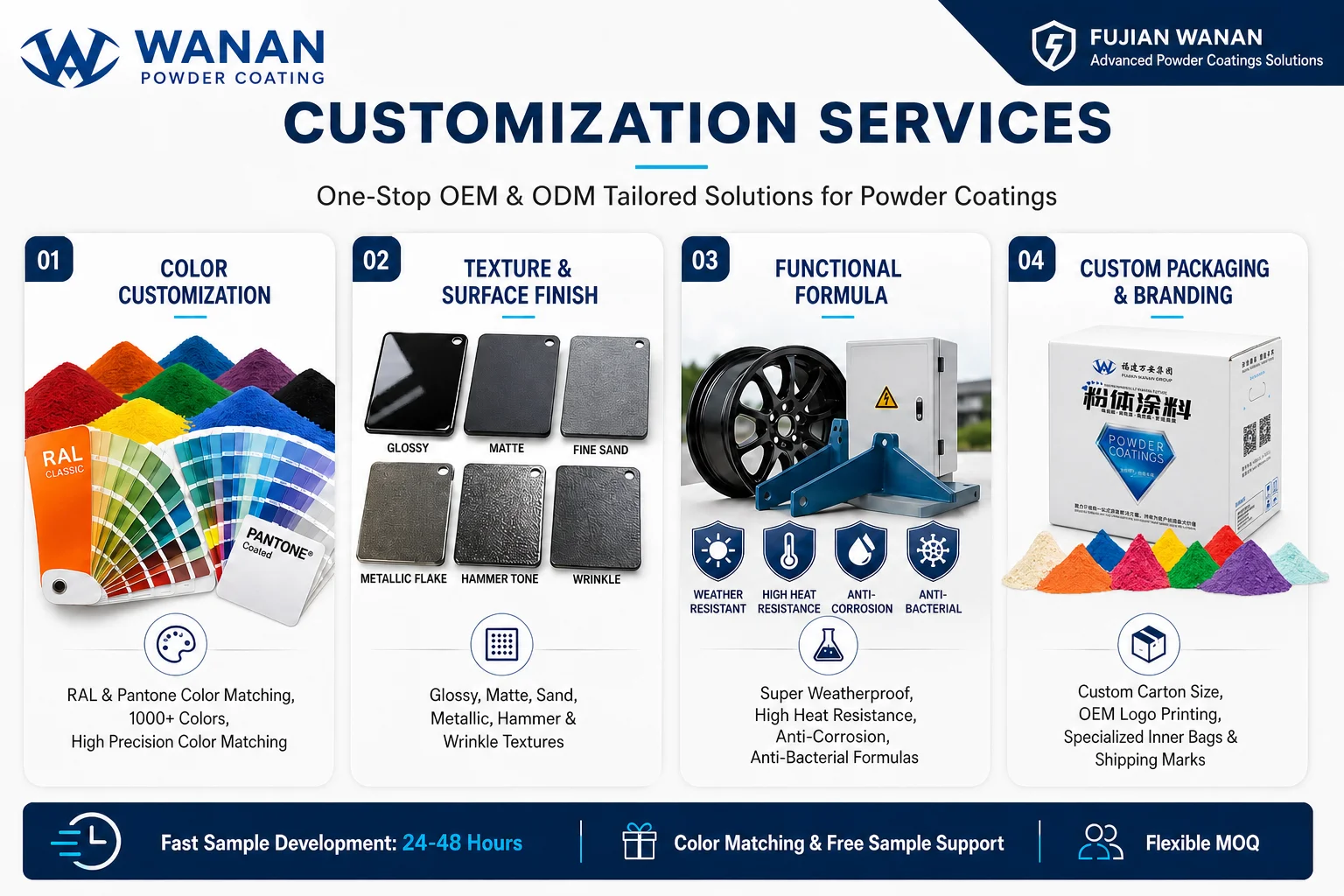
A uniform fine grain that scatters light instead of glaring. The matte texture softens handling marks and minor substrate imperfections that a gloss finish would put on show. |
Weather Resistance 800 Hours |
Tested to GB/T 1865 with no blistering, cracking or spalling, plus 1000 hours of heat and humidity exposure with no change - indoor and outdoor use from one grade. |
RoHS-Compliant, Reclaimable |
Solvent-free and 100% solid with RoHS-compliant grades available. Overspray can be reclaimed, and the cured thermosetting film will not re-melt in service. |





Fine Sand Texture Powder Coating: What Specifiers Should Check
A fine sand texture powder coating does two jobs in a single bake: it protects the metal underneath and it controls how the surface reads to the eye. The grain diffuses light instead of reflecting it, so a wine-red locker bank or a set of garden tools looks deliberate rather than merely painted, and small marks from handling and assembly stop being the first thing a buyer notices. That combination is why a fine sand texture powder coating has become the default specification for equipment that is touched, stacked and moved every day. Most buyers arrive at a fine sand texture powder coating after a gloss finish has failed inspection once.
What the Grain Actually Does
A smooth coating is a mirror at a low angle. Every weld seam, sanding trace and handling scuff remains visible, and the only fix is more surface preparation. A fine sand texture powder coating changes that equation: the film cures with a controlled, even grain that scatters light in all directions, so the eye registers texture rather than defects. The effect is practical, not cosmetic - fewer parts sent back for touch-up, and a finished product that survives shipping without a protective film. It is also the reason a fine sand texture powder coating is often chosen for large flat panels, where a gloss film shows every inconsistency. A fine sand texture powder coating therefore lowers the cost of preparation, not only the cost of rework.
Four Applications Where It Pays
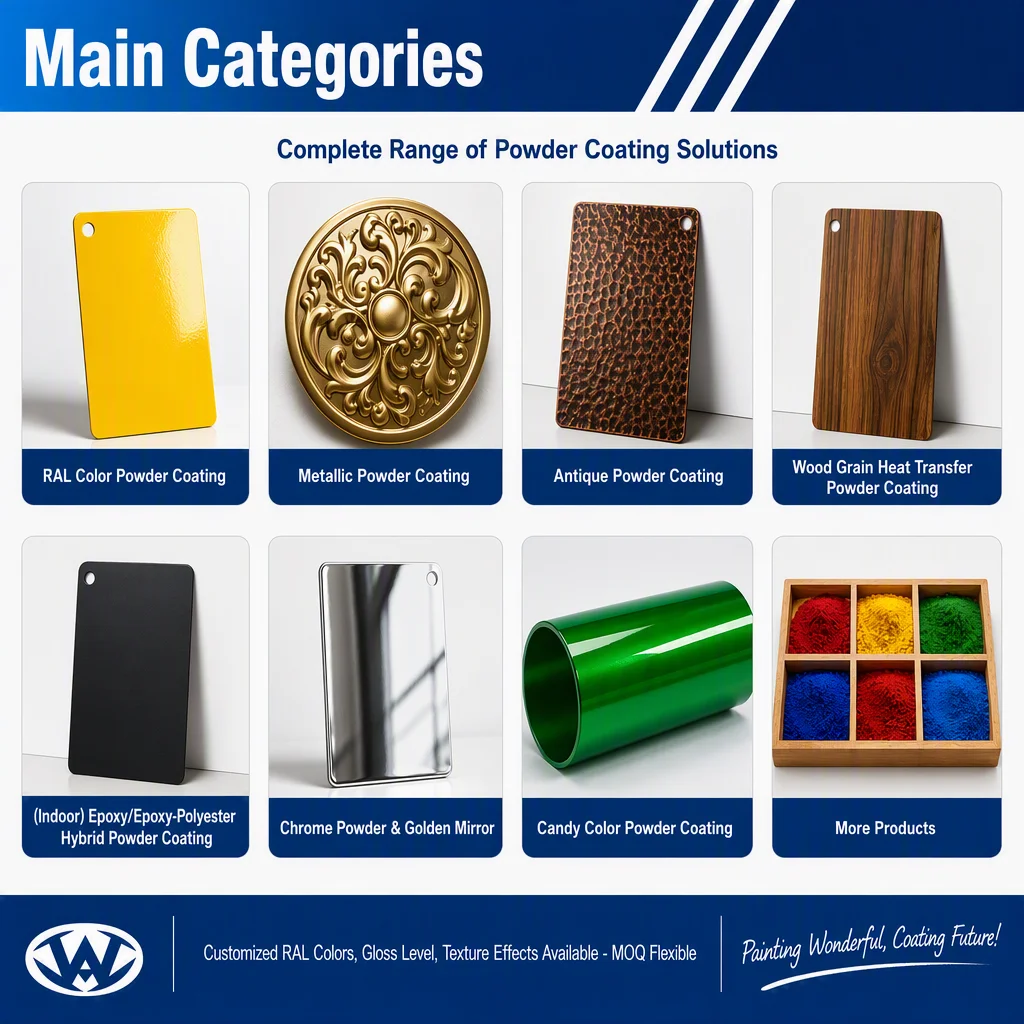
Four product families keep returning to the same specification. Audio and musical instrument housings use a fine sand texture powder coating because the matte grain reads as premium equipment and hides fingerprints. Smart parcel lockers specify a fine sand texture powder coating for outdoor durability and for touch tolerance on doors opened hundreds of times a day. Vending and kiosk machines combine it with bright or deep colours, where texture keeps large panels from looking thin. Garden power tools rely on it because impact and abrasion, not appearance, decide the service life. In each case a fine sand texture powder coating is chosen for the same reason: it keeps looking acceptable long after a gloss film would have given up.
The Numbers Behind the Matte Surface
Texture is a look; the film underneath is a specification, and with a fine sand texture powder coating the numbers are what make the look dependable. Published test data for this series covers salt spray at 1000 hours to GB/T 1771 with corrosion creep under 2 mm, heat and humidity at 1000 hours to GB/T 1740, and weather resistance at 800 hours to GB/T 1865 with no blistering, cracking or spalling. Mechanical results are adhesion grade 0 to GB/T 9286, pencil hardness 2H to ISO 15184, impact of 50 kg·cm or more to GB/T 1732, bending of 2 mm or less and cupping of 7 mm or more. Read together, those figures tell you whether a fine sand texture powder coating will survive your forming operation and your service environment, which is a more useful question than which texture looks best on a colour card.
Fine Sand, Metallic or Smooth
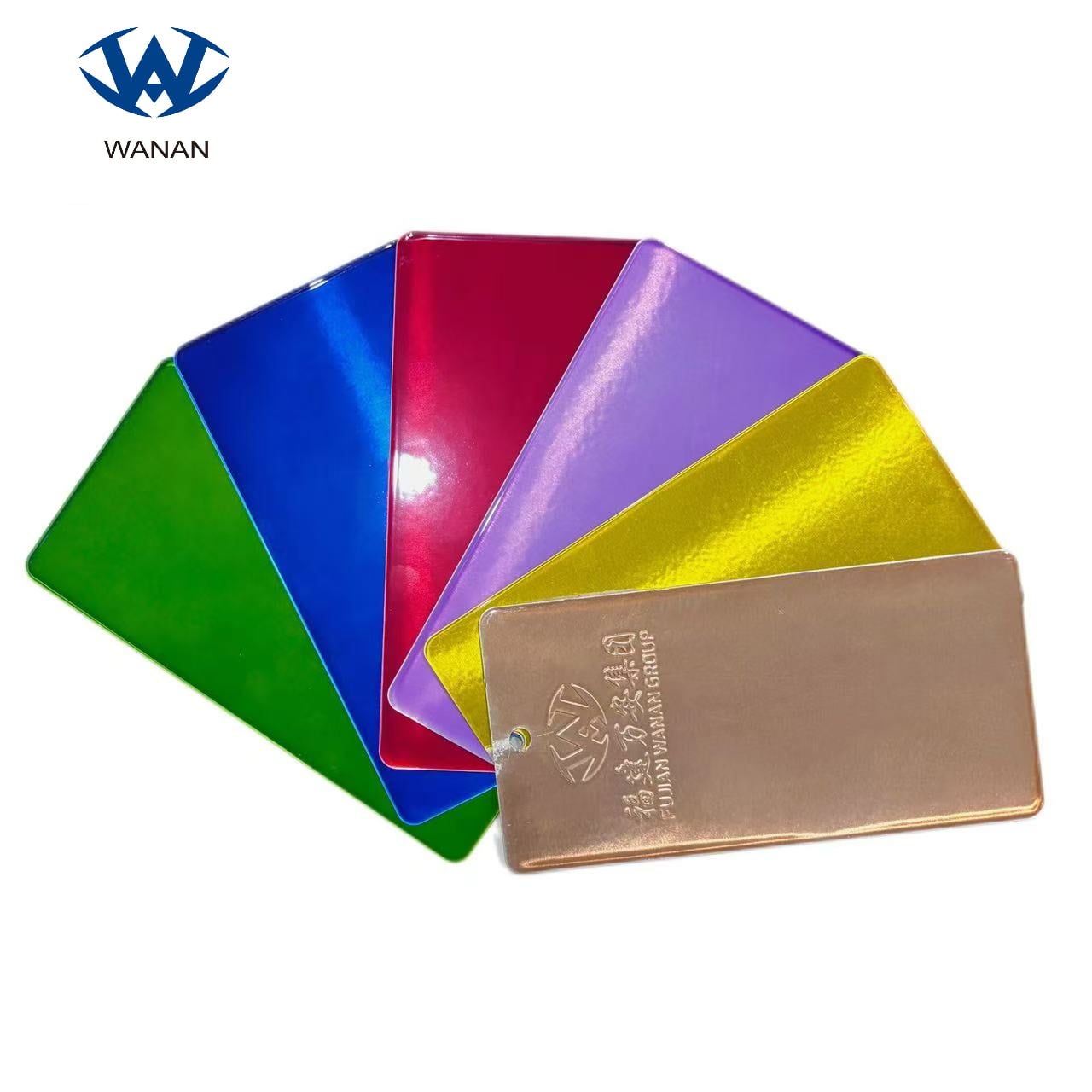
The three finishes solve different problems, and mixing them up is expensive. Metallic powders carry pigment flake that sparkles with a direction, which suits consumer goods that need to catch light. Smooth films deliver the highest gloss but demand the best substrate preparation. A fine sand texture powder coating sits in the middle: forgiving on preparation, uniform under any lighting, and stable in colour because there is no flake orientation to drift between batches. Where a product will be judged in a photograph or in a showroom, that consistency is worth more than sparkle, and a fine sand texture powder coating rarely disappoints on industrial equipment.
Colour Control on a Textured Surface
On a fine sand texture powder coating, colour is read together with grain, so the two have to be approved together. Send a physical sample or a painted part rather than a code alone; wine reds and deep greens in particular shift noticeably between a 35-40 micron film and a heavier coat. A supplier working from a large reference library can match quickly, and standard colour cards keep the fifth order from drifting away from the first. That is the discipline behind a repeatable fine sand texture powder coating: an approved panel on file, a lot number on every carton, and a comparison before each shipment.
Application Notes
A fine sand texture powder coating is forgiving on pretreatment but not on grounding or film build. Keep the substrate clean, de-greased and lightly abraded; confirm corona or tribo suitability for your gun; and stay inside the film thickness range agreed at sampling, because texture depth and colour both move with film build. Reclaimed powder from a fine sand texture powder coating can be blended back in controlled ratios, but uncontrolled reclaim is the most common cause of patchy grain. On formed parts, check coverage at bends and recesses on a first-off sample instead of discovering it at final inspection.
Choosing the Supplier
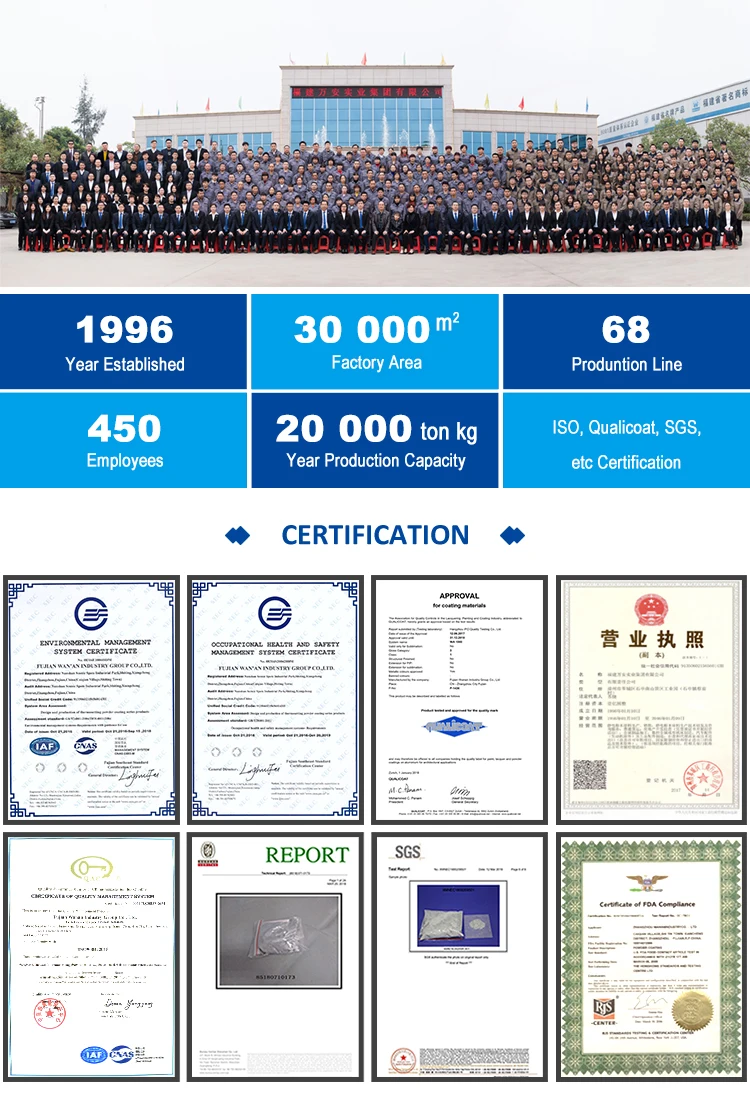
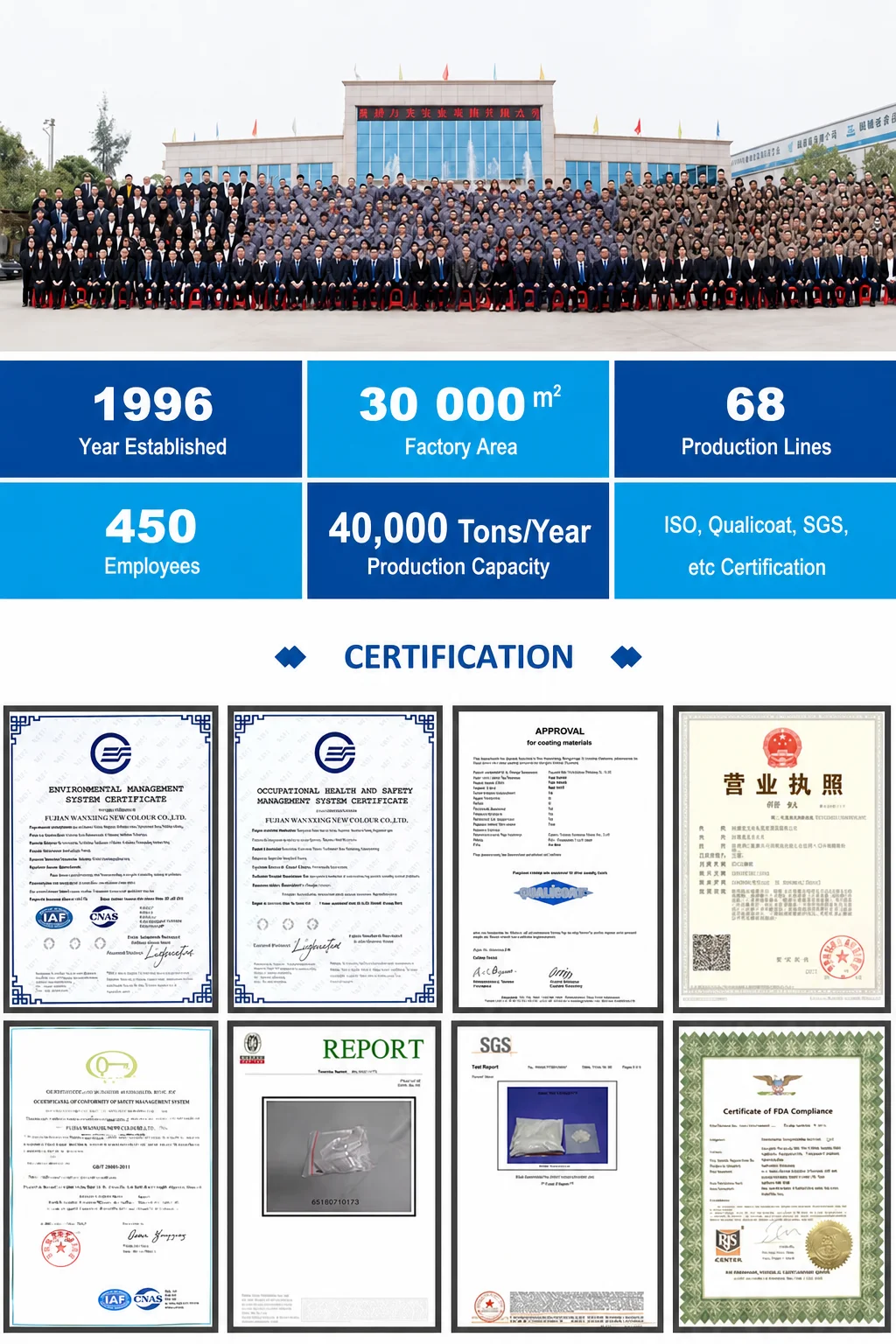
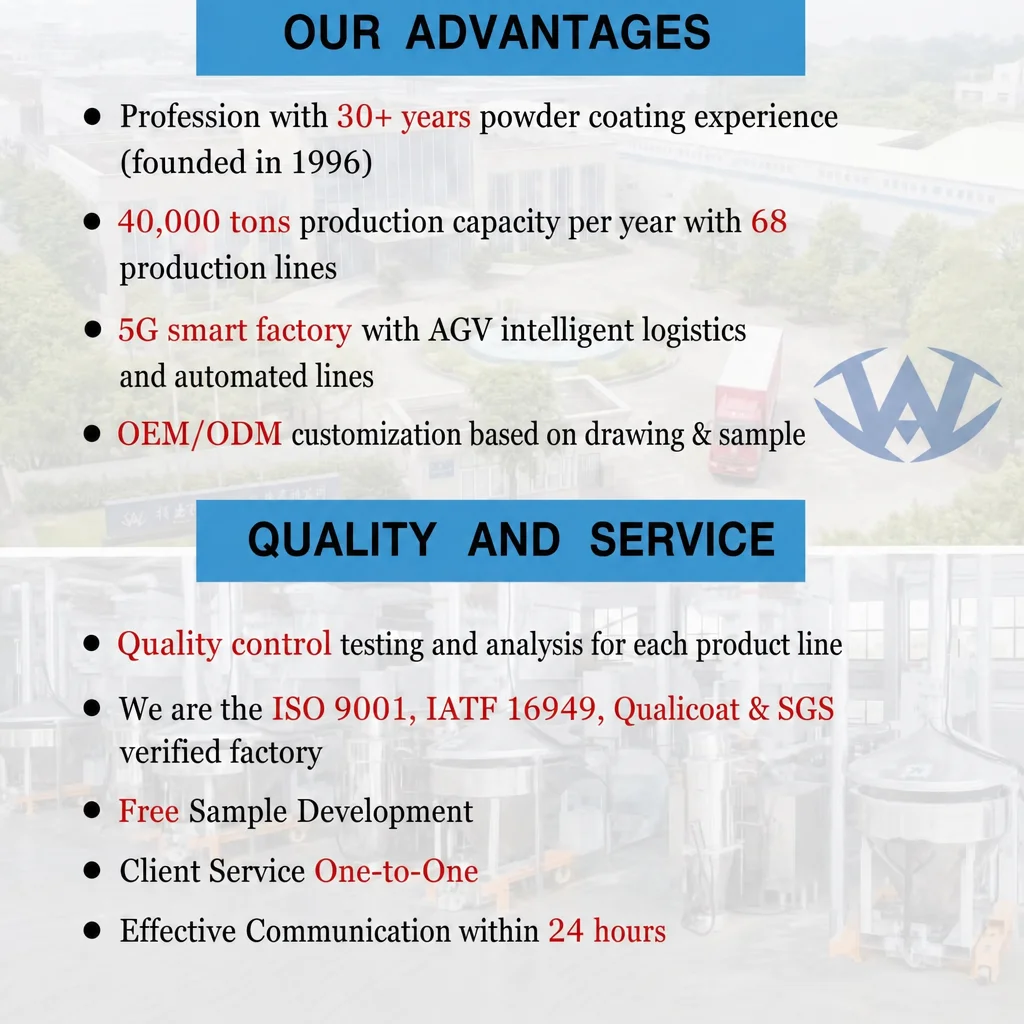
Wanan has produced thermosetting powder coatings since 1996, with production bases in Fujian, Guangdong, Zhejiang, Shandong, Henan and Cambodia, an in-house testing centre accredited by CNAS, and ISO 9001, IATF, UL and QUALICOAT certification. The fine sand texture powder coating range is supported by a reference library of nearly 100,000 samples and by engineers who work on customer lines rather than only in a laboratory. Every fine sand texture powder coating enquiry is answered by a named contact, not an auto-reply. Send your substrate, the colour target and the service environment, and we will return a matched panel, the test data and a quotation you can compare line by line.