EN



Advantage |
What it delivers for your project |
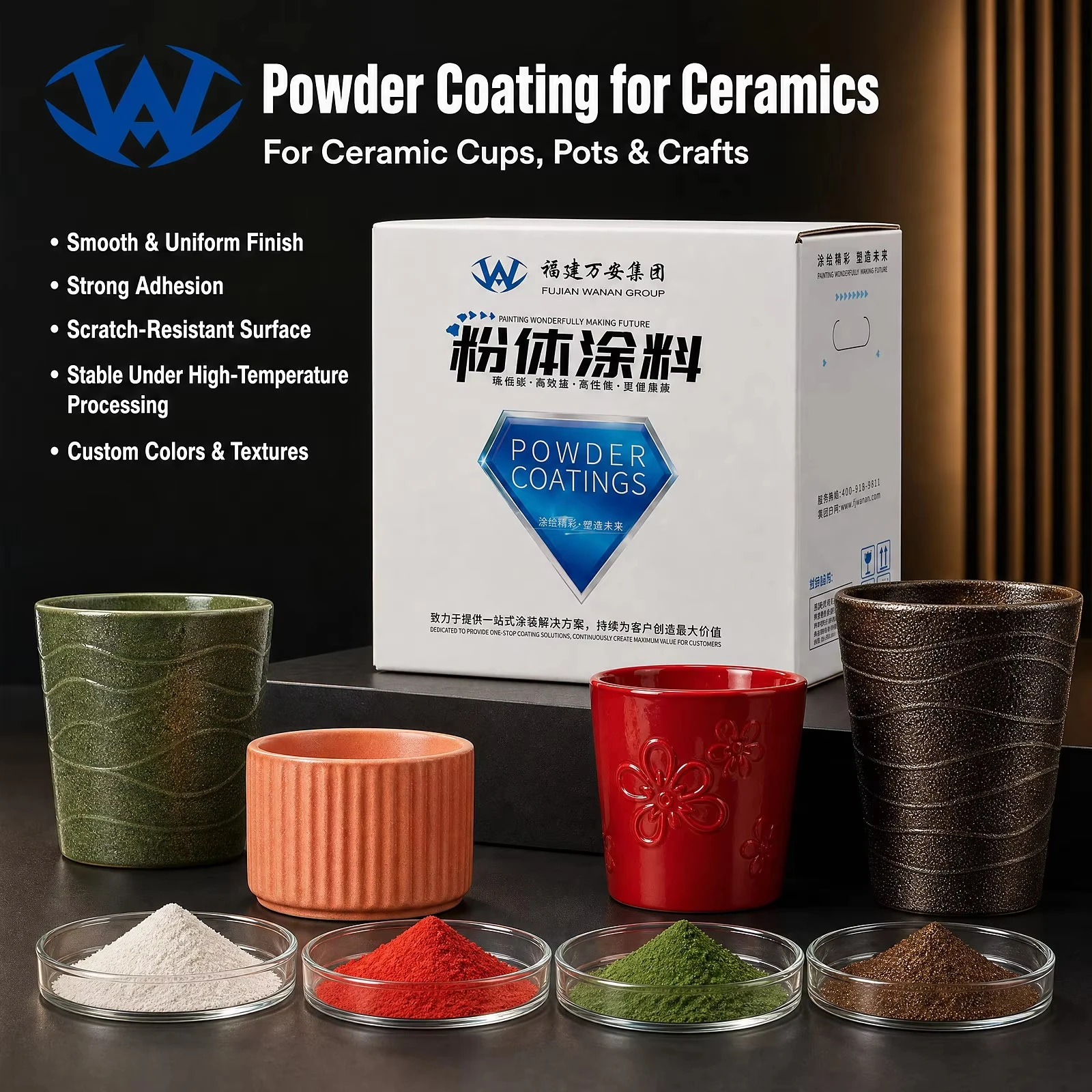
Smooth, Uniform Finish |
The coating flows out to an even film without orange peel, so the colour reads the same on a cup, a pot and every piece in a matched set. |
Strong Adhesion |
The film bonds firmly to the ceramic body, so the surface holds through stacking, packing and transport instead of chipping at the rim or the base. |
Scratch-Resistant Surface |
A hard surface that keeps its colour where pieces rub against each other in storage, display and daily handling. |
Stable Through High-Temperature Processing |
Formulated to hold colour and film integrity through the high-temperature stages of ceramic production, so the finish you approve is the finish that comes off the line. |
Custom Colors and Textures |
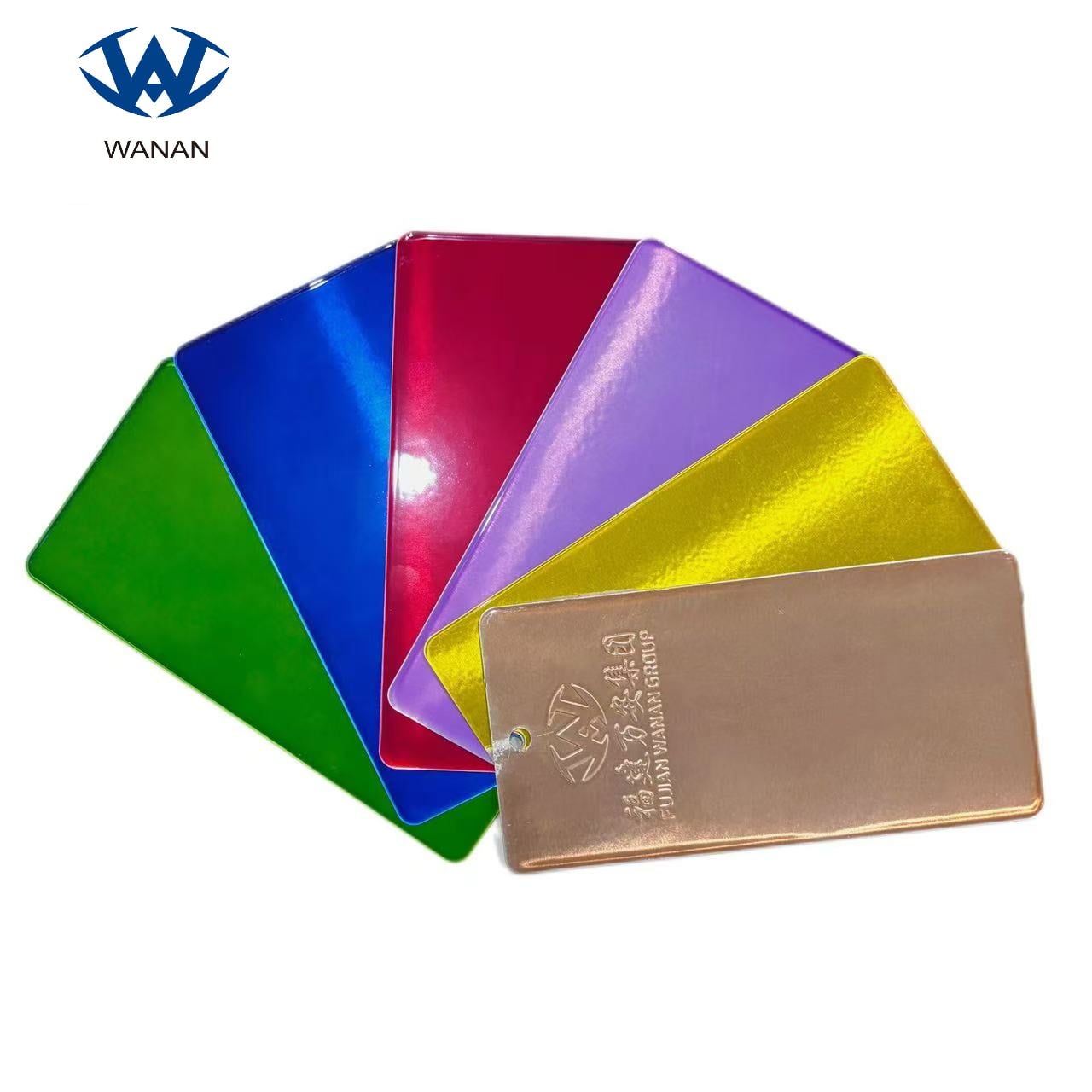
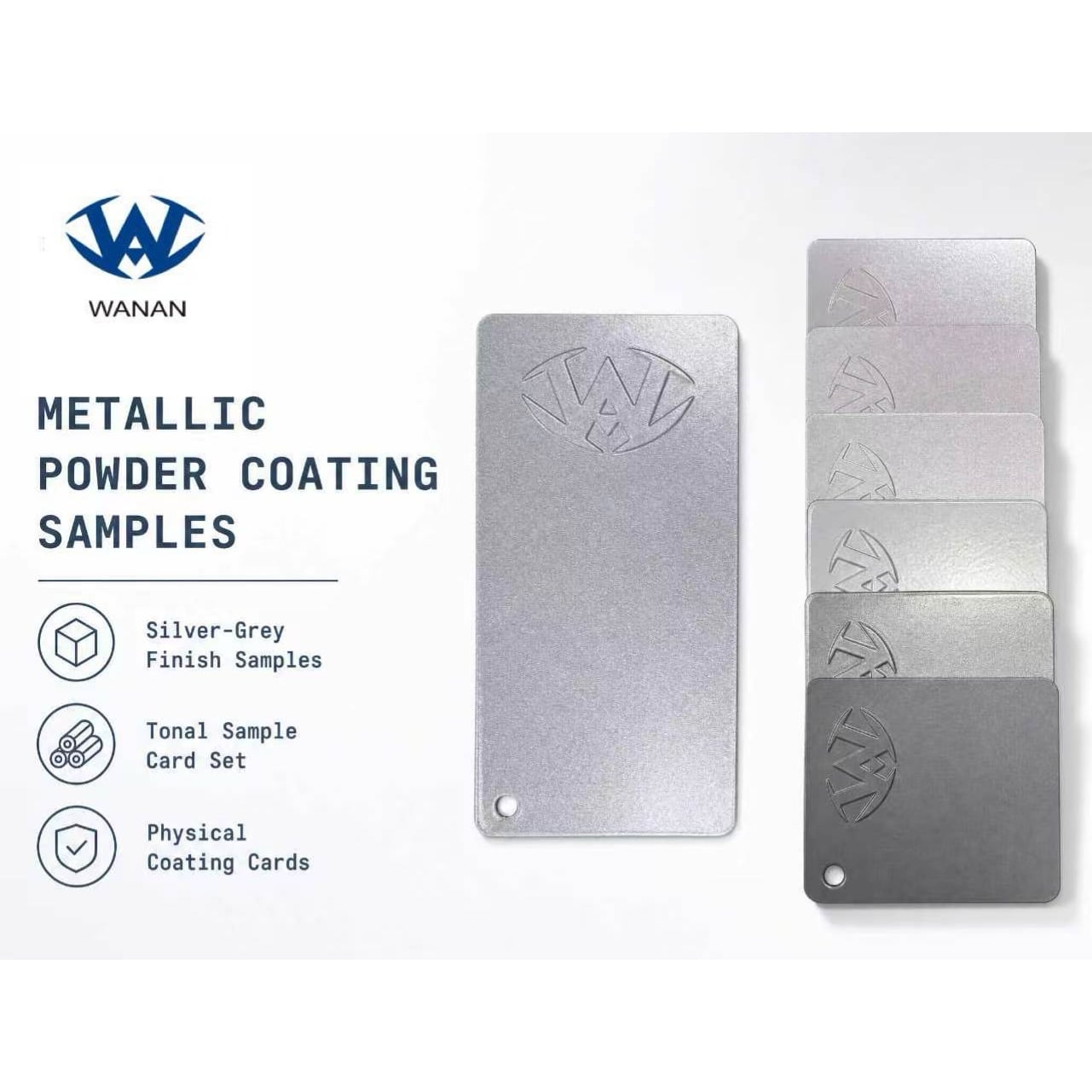
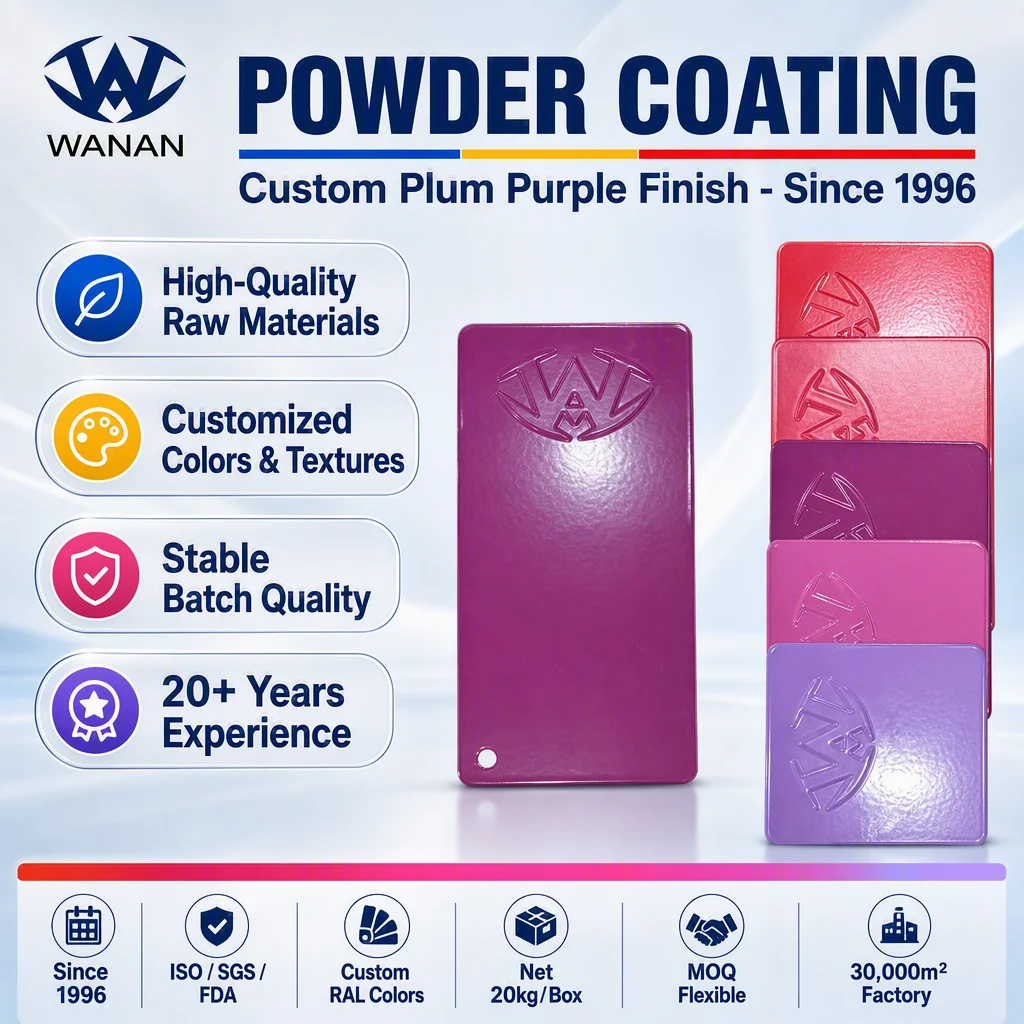
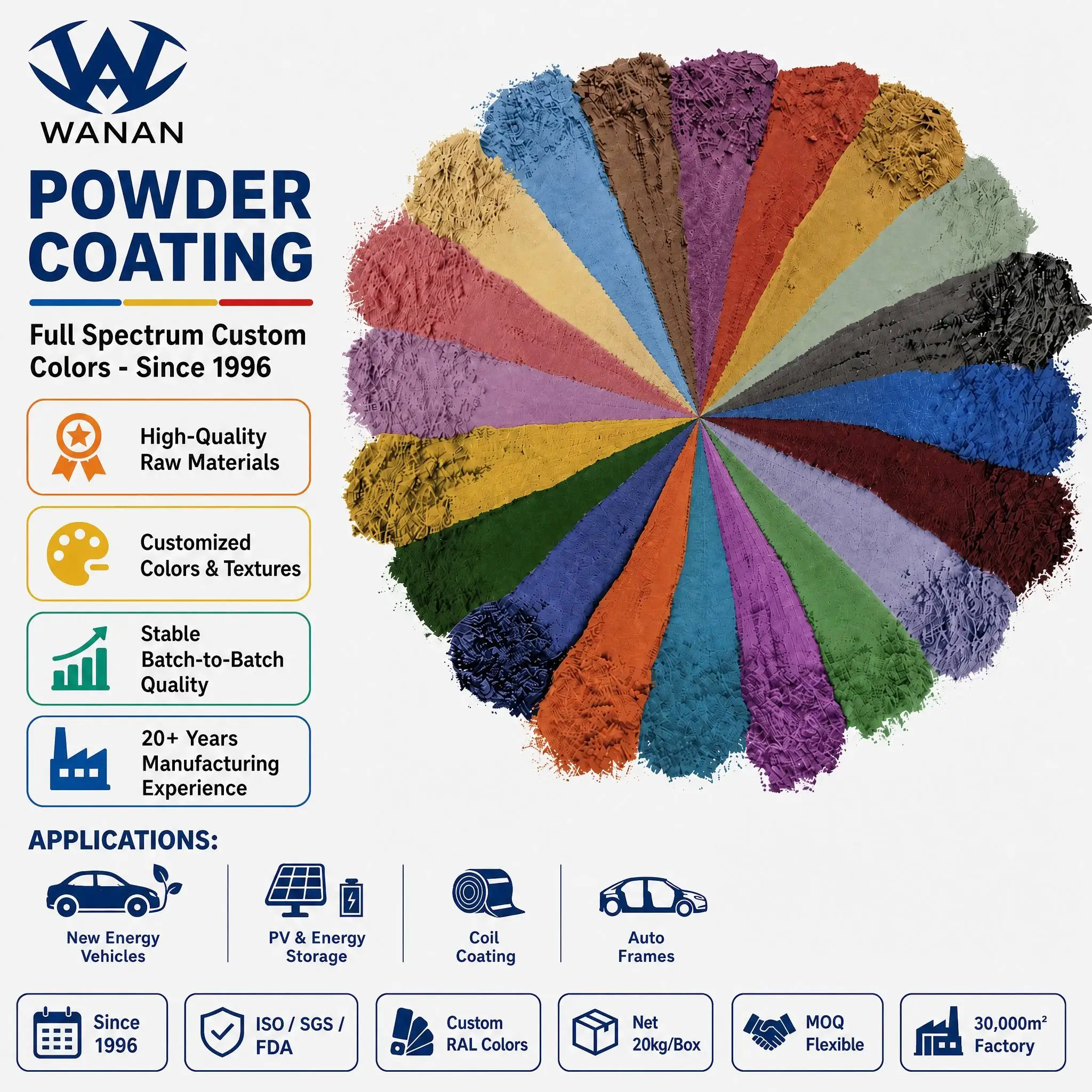
Solid, matte, sand-grain and metallic looks, matched from a reference library of nearly 100,000 samples - to your existing finish, a colour code or a physical sample. |
Powder Coating for Ceramics - Cups, Pots, Crafts & Decor
Smooth, uniform, scratch-resistant coating for ceramic cups, pots and crafts, stable through high-temperature processing. Custom colors, MOQ 200kg per shade.
- Overview
- Recommended Products
About Product
Highlight
About Us

Service |
Details |
Colour and Effect Matching |
Send a fired sample, a colour code, or a photo set with a physical reference. Nearly 100,000 stored samples support fast matching, and standard colour cards control variation between batches. |
Trial on Your Own Body |
Samples are available on request with freight paid by the buyer, so colour and surface can be judged on your body, your thickness and your firing curve. |
Process Support |
Share your process curve and line conditions. Our engineers recommend the matching grade and attend trials, so the first production run is not the first time the two processes meet. |
Batch Consistency and Traceability |
Each batch is produced against the approved standard with lot records, and repeat orders are compared with the retained sample before shipment. |
Export Packing and OEM Labeling |
Each box holds 20 kg or 25 kg with an inner liner and is palletized for export; neutral or OEM labeling is available for distributors. |
100% Response, 3-5 Day Delivery |
Every inquiry is answered by a named contact. Standard grades ship about 3-5 days after payment is confirmed, excluding Chinese public holidays. |
FAQs
Question |
Answer |
Which ceramic products is this coating designed for? |
Cups, mugs, pots, planters, vases, crafts and decorative ware - pieces where colour consistency, a smooth surface and resistance to rubbing matter more than high-volume industrial throughput. |
Can you match the colour we already use? |
Yes. Send a fired piece or a physical sample together with the code you work to. Deep reds, greens and metallic browns shift under different lighting, so a physical reference is more reliable than a code alone. |
Is the coating suitable for food-contact ceramics? |
Food-contact compliance depends on the grade and on the standard of your destination market. Tell us the market and the requirement you work to, and we will confirm the matching grade and the documentation before you place an order. |
Will it hold through our high-temperature processing? |
The system is formulated for stability through high-temperature processing. Share your process curve, dwell time and the body you use, and we will confirm the grade and the trial plan before production rather than after. |
What are the MOQ and packing? |
MOQ is 200 kg per shade. Standard packing is 20 kg or 25 kg per box with an inner liner, palletized for export; neutral or OEM labels are available. |
How long is delivery? |
About 3-5 days after payment is confirmed for standard grades, excluding Chinese public holidays. Custom colours start after the sample is approved. |
Which certificates do you hold? |
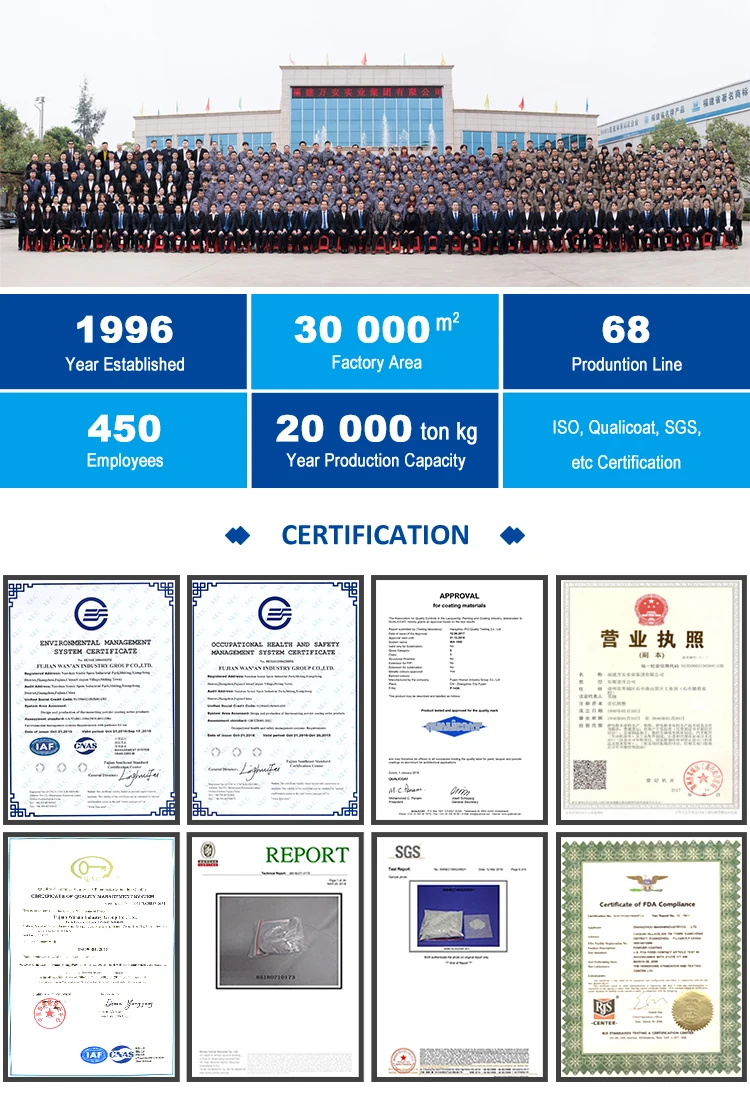
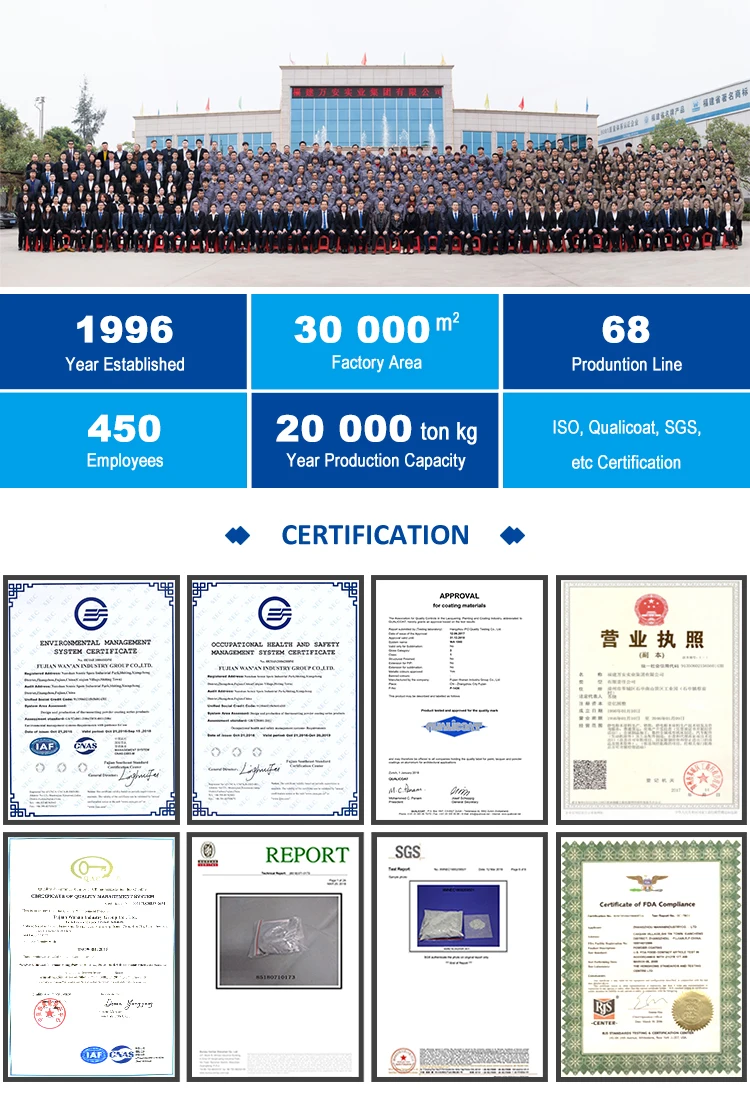
ISO 9001, IATF, UL and QUALICOAT, with an in-house testing centre accredited by CNAS. Compliance documents for your market are confirmed per grade. |
Can we test before ordering? |
Yes. Samples are available on request; the freight is paid by the buyer. Test on your own body and process, then place the order against the approved sample. |
Powder Coating for Ceramics: Getting Colour and Durability Right
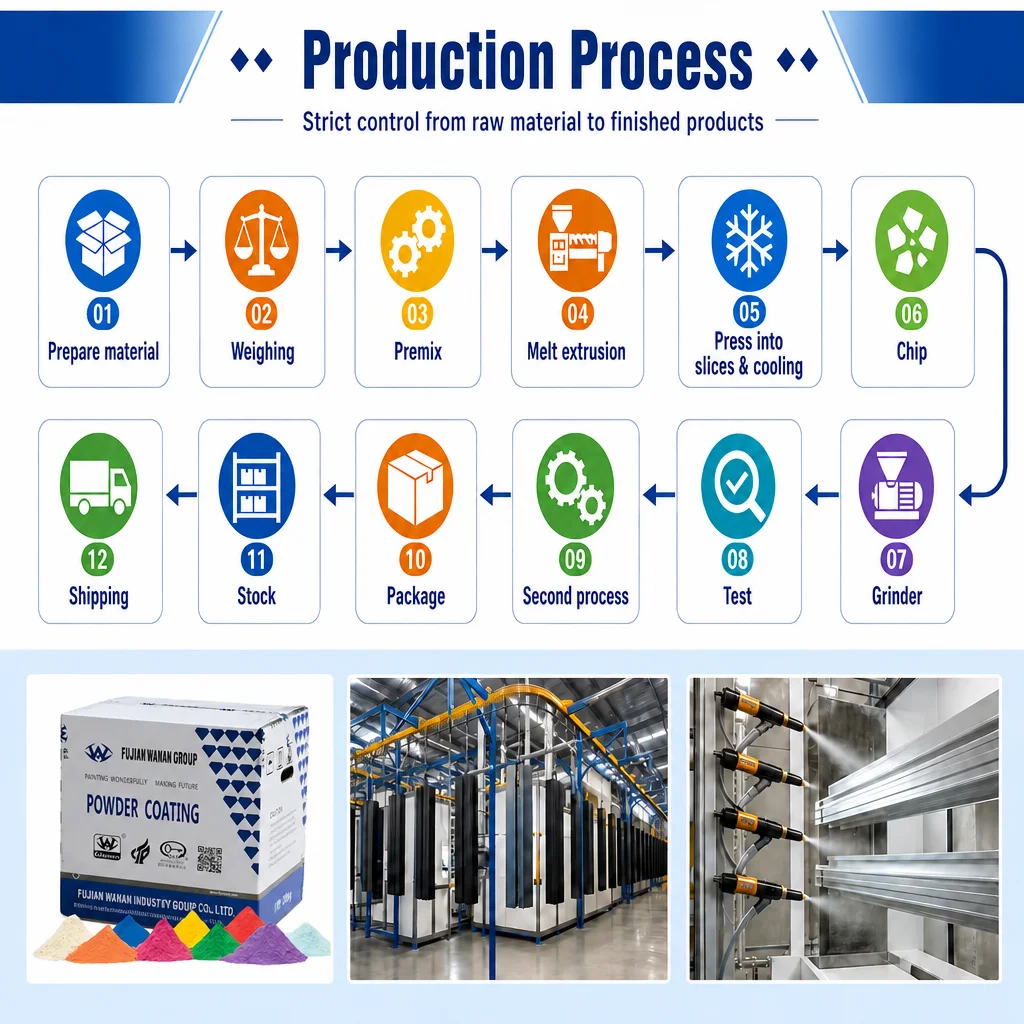
Powder coating for ceramics is a different discipline from coating metal. It is chosen for how it looks and kept for how it holds. A cup is judged in the hand, at arm's length, under shop lighting; a pot is judged against the other pots on the same shelf. The film has to be smooth enough to read as a finish, hard enough to survive stacking, and stable enough to come through the production process with the colour you approved. Buyers who treat powder coating for ceramics as a commodity purchase usually discover the difference at the first complaint, when half a container has to be re-sorted by shade.
What It Has to Deliver
Four requirements decide whether powder coating for ceramics works on a production line. First, a smooth and uniform film: any orange peel or seed shows immediately on a curved wall. Second, adhesion strong enough that rims and bases do not chip when pieces are stacked, the requirement buyers of powder coating for ceramics test first. Third, a scratch-resistant surface, because ceramic ware rubs against itself in storage and in the shop. Fourth, stability through high-temperature processing, so the appearance survives the process rather than being altered by it. Powder coating for ceramics that satisfies all four behaves like part of the product; one that misses any of them behaves like a coating that was applied to it.
Where It Is Used
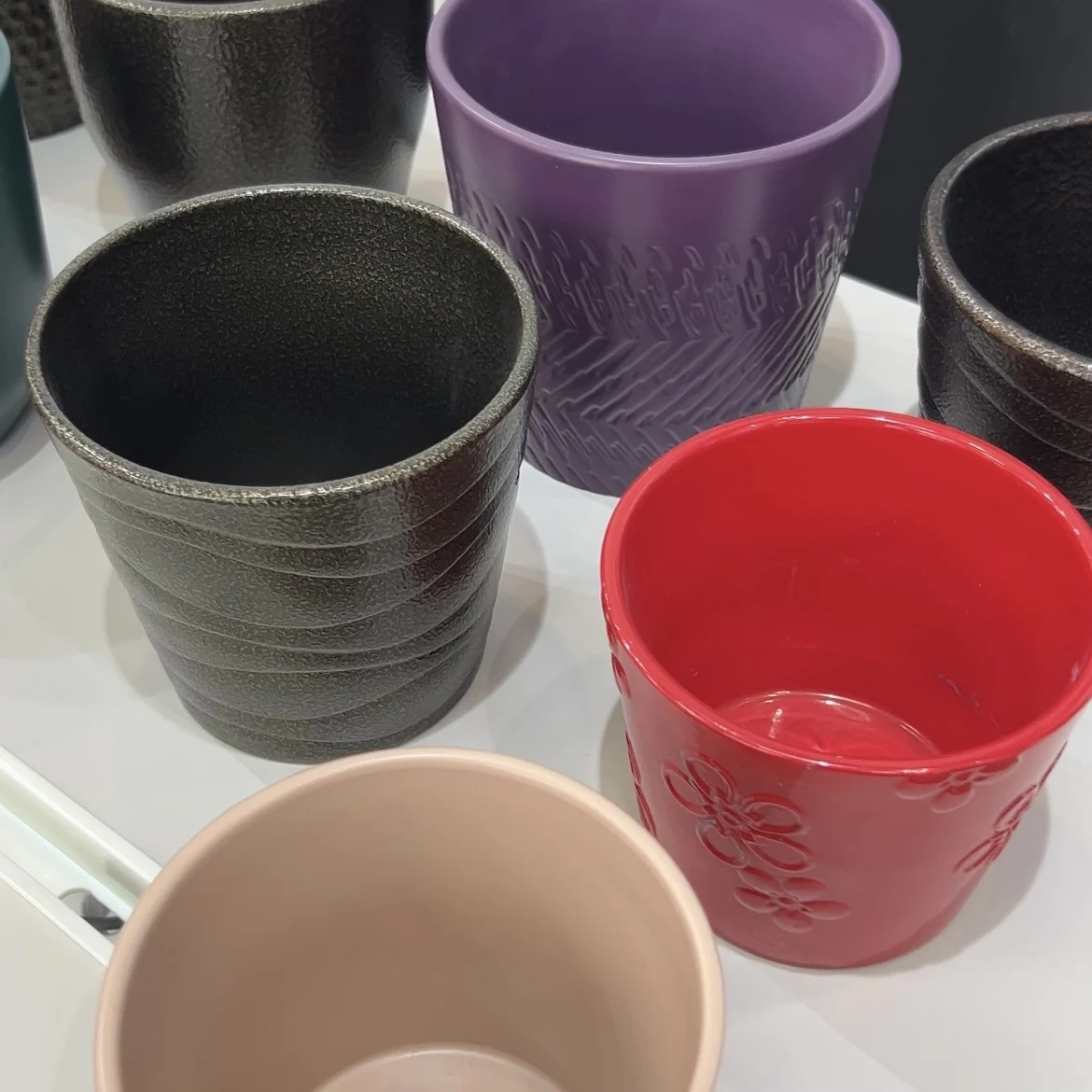
The applications for powder coating for ceramics are small objects with high visual expectations. Cups and mugs carry the colour closest to the buyer's hand, and a shade difference between two pieces in a set is noticed at once. Pots and planters are larger surfaces where uniformity across the curve matters more than fine detail. Crafts, vases and decorative ware use texture as design: a sand grain that catches light, a matte that reads as stone, a metallic brown that suggests age. In all of them, powder coating for ceramics is doing a decorative job with a protective film underneath, which is why both halves of that sentence have to be verified before a batch is released. That is also why powder coating for ceramics is specified on appearance first and protection second.
Smooth Film, Strong Adhesion, Scratch Resistance
These three properties decide whether powder coating for ceramics is right for your line, and they usually fail together. A film that is very smooth but under-cured will chip at the rim; a film with excellent adhesion but coarse grain will look unfinished on a cup wall. The practical test is not a single data sheet number but a sample piece that has been through your whole process: sprayed at your thickness, processed on your curve, then stacked, packed and handled the way your warehouse handles it. That is the only way to judge powder coating for ceramics fairly, and it is the reason a trial piece matters more than a specification table for this product category.
Stability Through High-Temperature Processing
Colour shift is the quiet failure mode in powder coating for ceramics. A red that looks correct on a lab panel can move toward brown on a production line if the thermal history differs, and the shift is only visible when the finished pieces sit next to the approved sample. Ask any supplier of powder coating for ceramics to state what the film is expected to do through your specific curve - heating rate, dwell, cooling - rather than quoting a generic temperature range. Then confirm it on a fired trial piece before the first production order, while a colour correction still costs a sample instead of a container.
Colour and Texture Control
Match powder coating for ceramics against something physical. A code, a photograph or a screen is a starting point; a fired sample is the reference. Deep reds, forest greens and metallic browns are the shades most likely to drift between a light coat and a heavy one, and texture makes the difference more visible because grain and colour are read together. A supplier who works with powder coating for ceramics every day can match quickly, and standard colour cards keep the tenth batch from drifting away from the first. That discipline is what turns powder coating for ceramics from a one-off sample into a repeatable product line.
Sampling Before Production
For powder coating for ceramics, sampling is not a formality. A trial piece tells you four things at once: whether the colour survives firing, whether the film is smooth enough at your thickness, whether the adhesion holds at the rim, and whether the surface still looks right after packing. Samples are available on request, with freight paid by the buyer, and the approved piece becomes the standard that every later batch is compared against. Buyers who skip this step tend to renegotiate quality after the first shipment; buyers who do it once rarely need to.
Choosing a Supplier
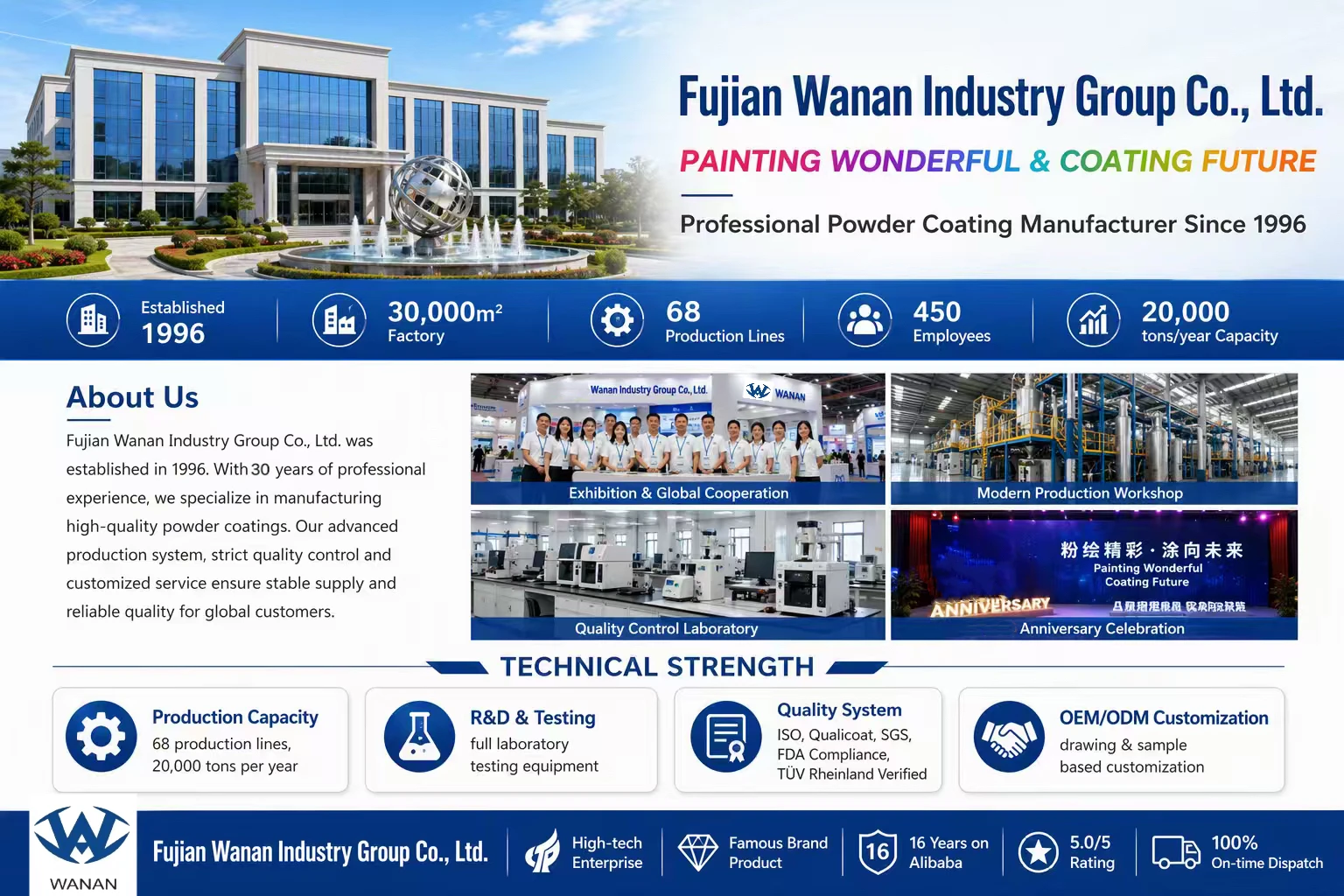
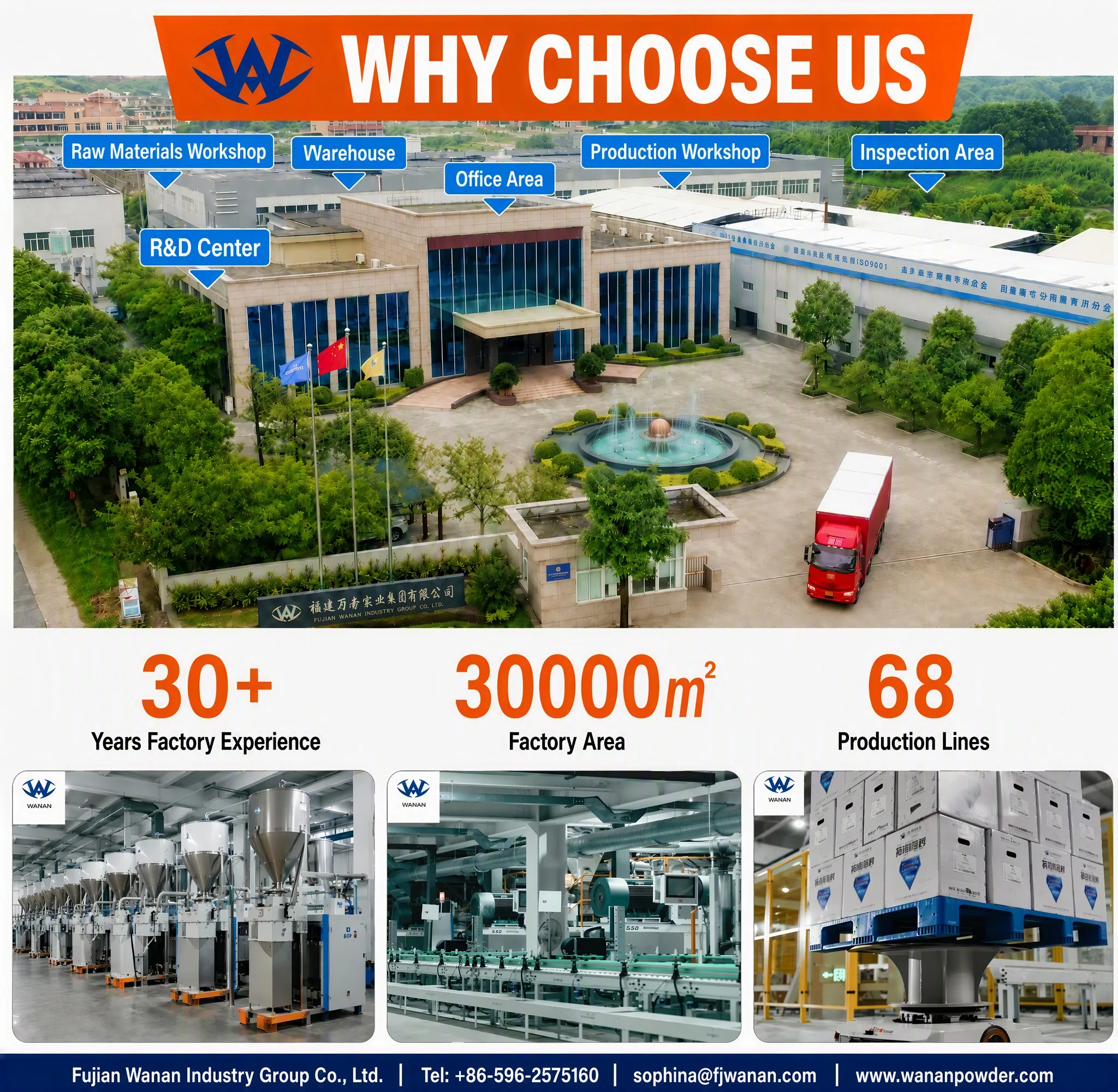
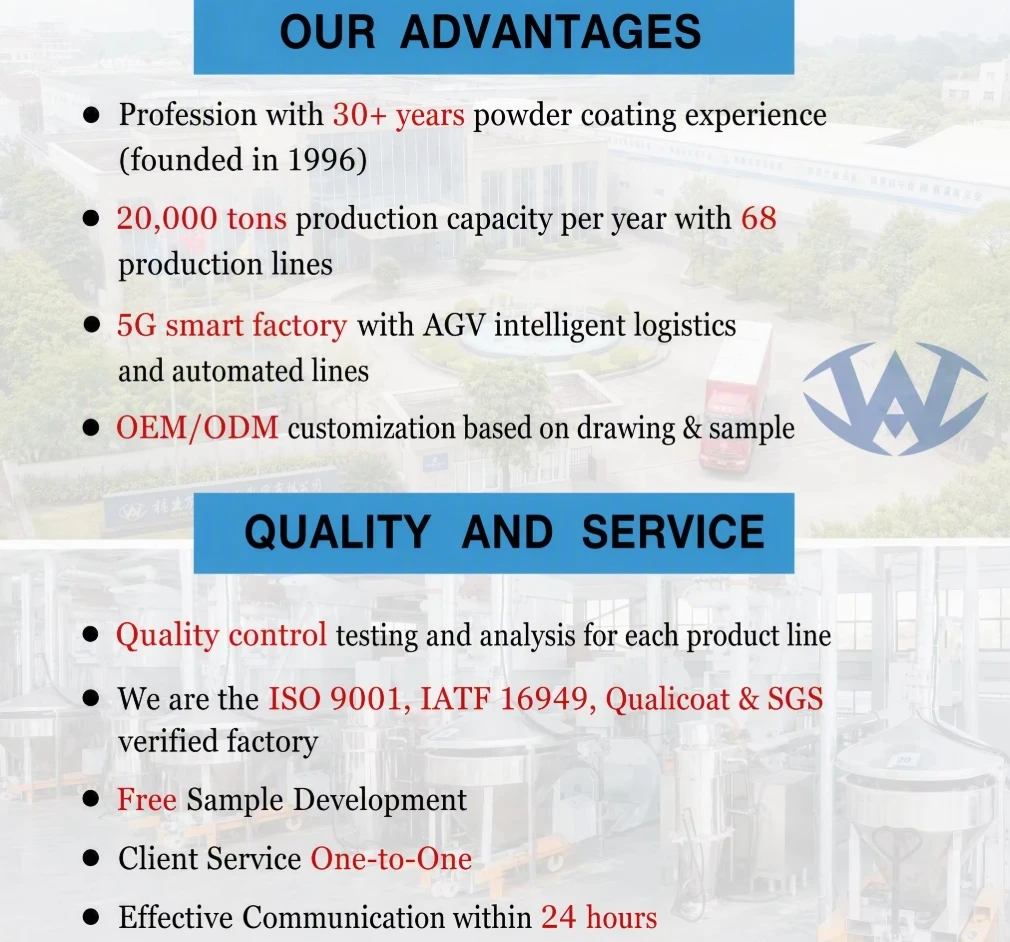
Wanan has produced thermosetting powder coatings since 1996, with production bases in Fujian, Guangdong, Zhejiang, Shandong, Henan and Cambodia, an in-house testing centre accredited by CNAS, and ISO 9001, IATF, UL and QUALICOAT certification. A reference library of nearly 100,000 samples and engineers who work on customer lines support the powder coating for ceramics range, and every inquiry is answered by a named contact. Tell us the body, the colour target and the process curve you run for the powder coating for ceramics you need, and we will return a matched sample, the documentation your market requires and a quotation you can compare line by line.