EN




Advantage |
What it delivers for your project |
Deep Shades Held to a Retained Panel |
Deep plum shifts more than any light colour between a thin and a heavy coat. Every batch is produced against the approved panel and carries a lot number, so the tenth order is compared with the same standard as the first. |
Coverage in Corners and Welds |
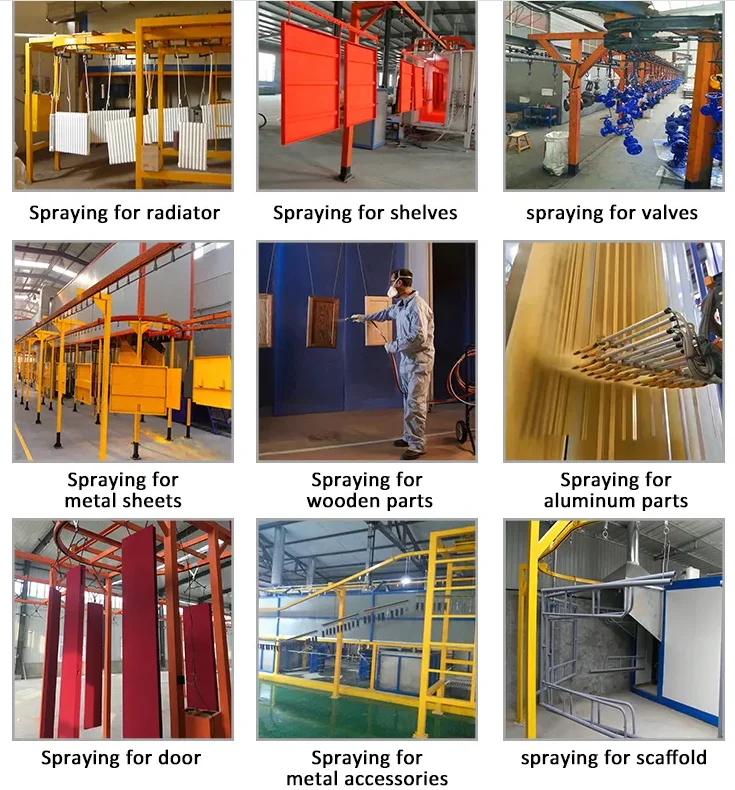
Electrostatic application is specified for edge, recess and weld coverage on transformer tanks and module housings - the places where a thin film becomes a corrosion point first. |
Impact 50 kg.cm, Bending 2 mm |
Impact resistance of 50 kg.cm or more, bending of 2 mm or less, cupping of 7 mm or more and pencil hardness 2H, so coated sheet survives forming and handling without opening to bare metal. |
1000-Hour Salt Spray |
Tested to GB/T 1771 at 1000 hours with corrosion creep under 2 mm, plus 1000 hours of heat and humidity to GB/T 1740 - the exposure a transformer or a module frame meets in service. |
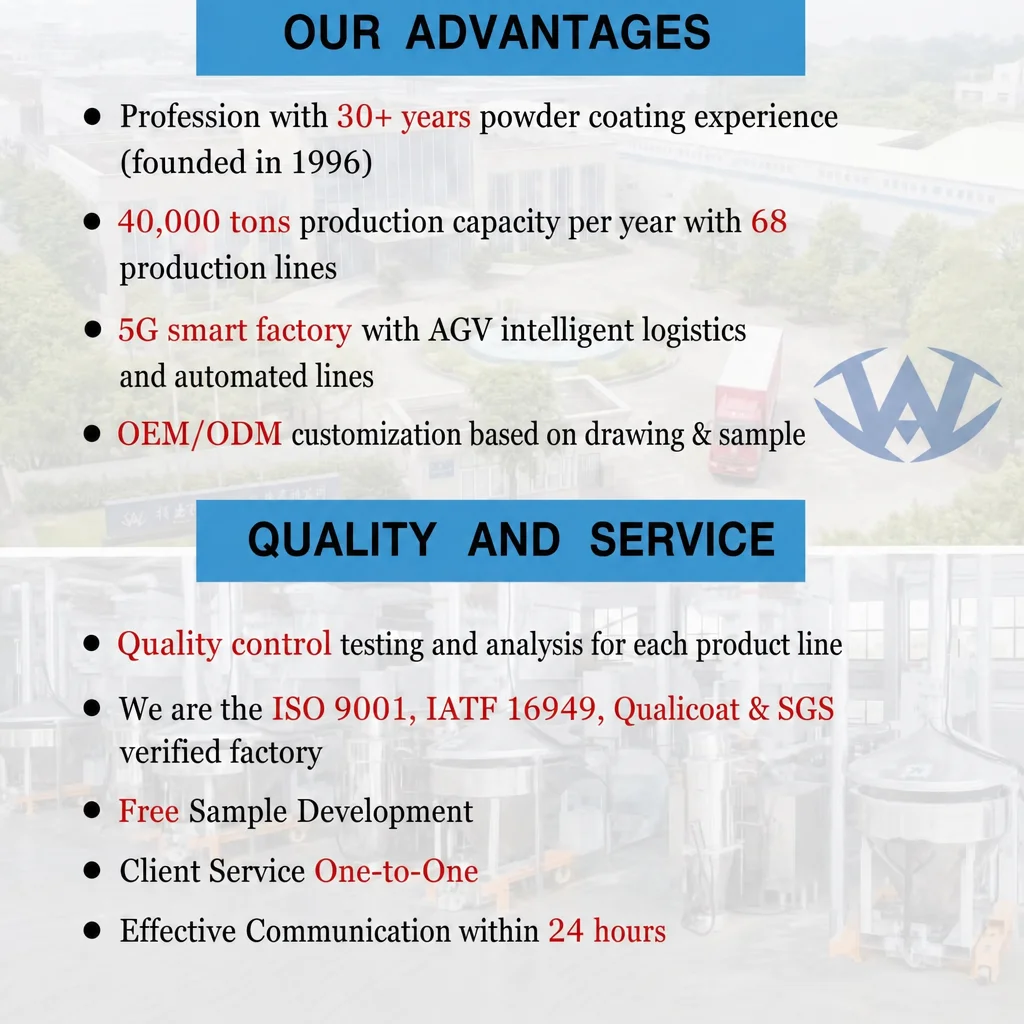
30 Years, Standard-Setting Plant |
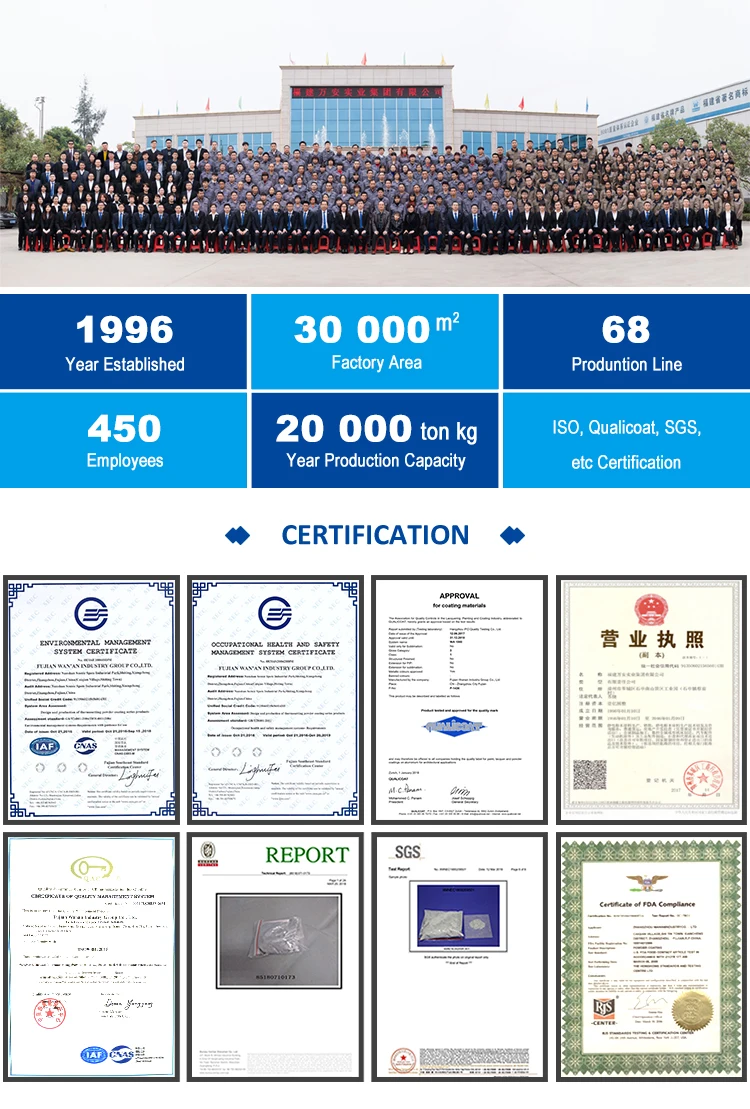
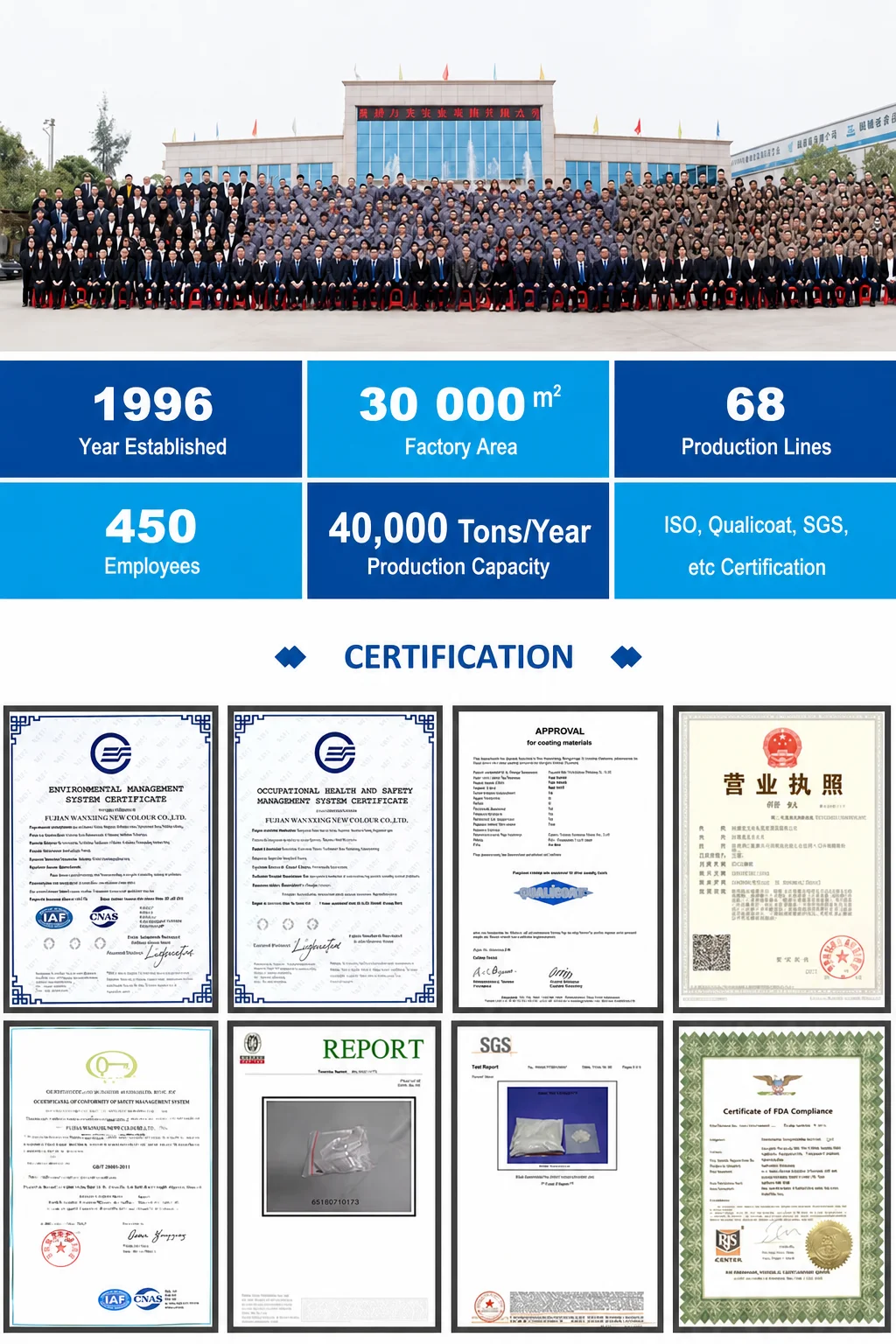
Produced since 1996 on six bases, tested in a CNAS-accredited in-house laboratory, with ISO 9001, IATF, UL, QUALICOAT and IAF certification and a role in drafting HG/T 2006-2022. |
Plum Matte Powder Coating - EV, Transformer and Cabinet
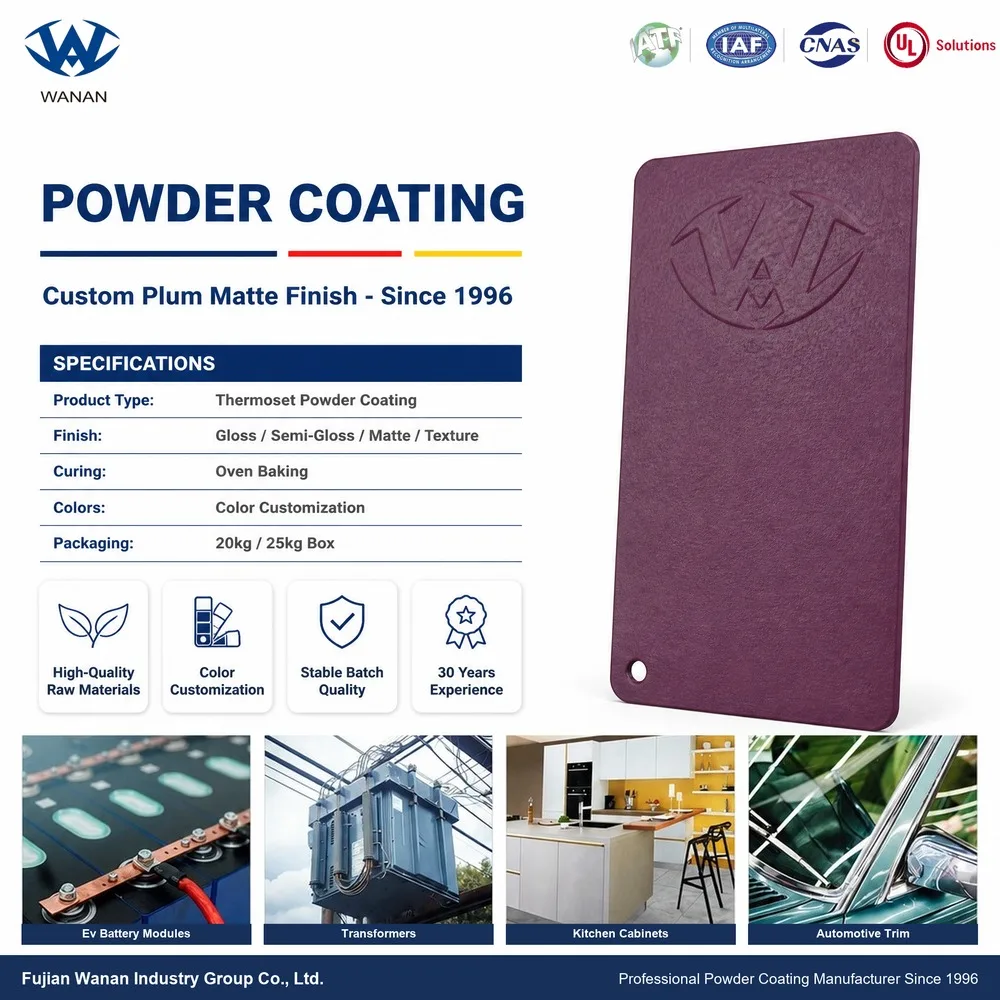
Deep plum matte thermoset powder coating with 1000-hour salt spray, 2H hardness and lot-traced colour. MOQ 200kg per shade, packed 20kg or 25kg per box.
- Overview
- Recommended Products
About Product
Highlight

About Us



Service |
Details |
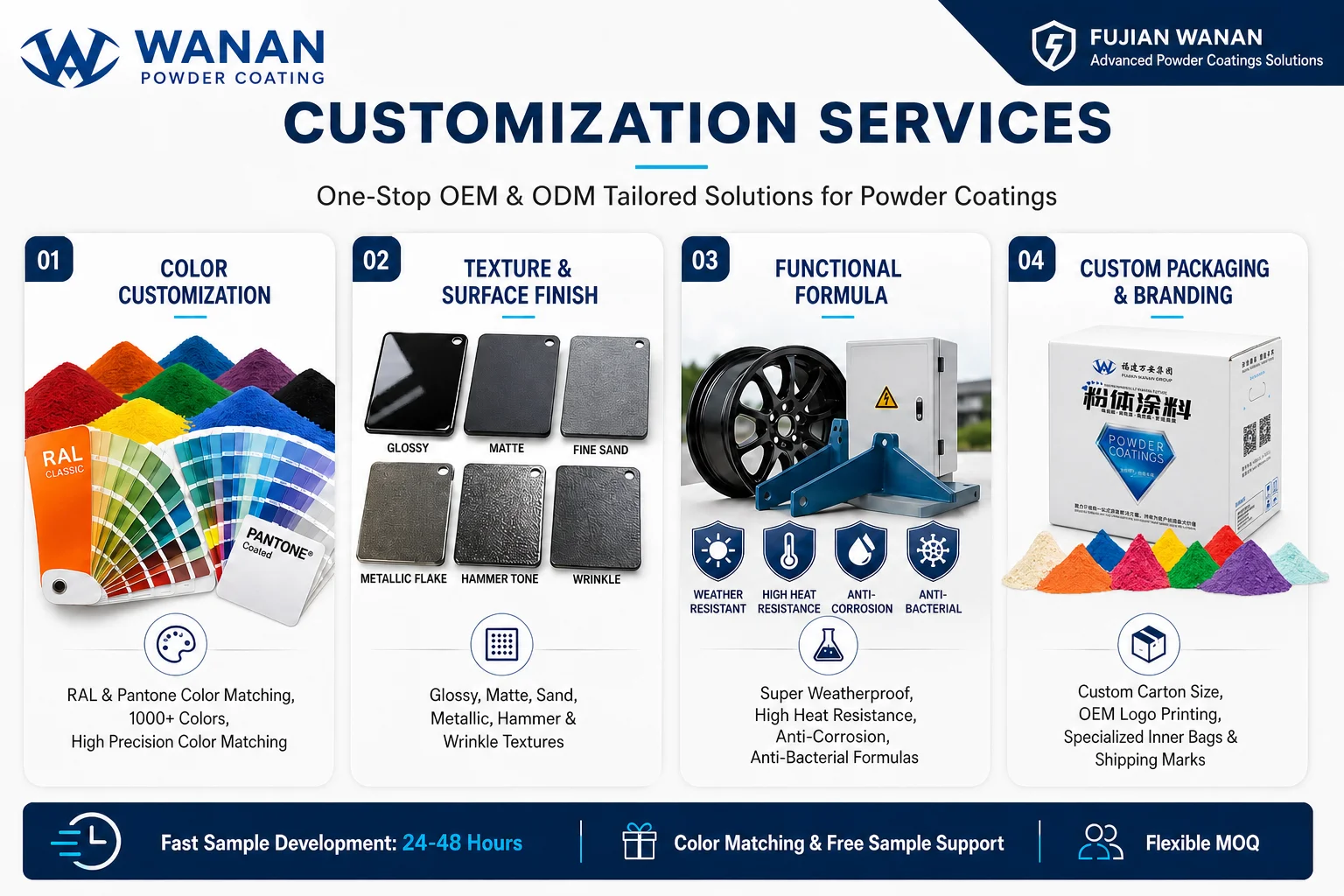
Colour Approved at Your Film Thickness |
The approval panel is coated at the film thickness your line runs and cured in your oven. Deep plum approved at a lab thickness is the single most common reason a production batch looks wrong. |
Coverage Review on the Part |
Send the part drawing. We review edges, cut-outs and weld seams, then recommend gun access, grounding and film build targets for that geometry rather than a generic figure. |
Retained Standard & Lot Records |
The approved panel stays on file, every batch carries a lot number, and repeat orders are compared with the standard before shipment - which is what makes a deep shade repeatable at all. |
Test Reports With the Goods |
Salt spray, humidity, weather, adhesion, hardness, impact, bending and cupping results ship with the batch, ready for an audit, a tender or a customer's own incoming inspection. |
200 kg Trial, 20 or 25 kg Boxes |
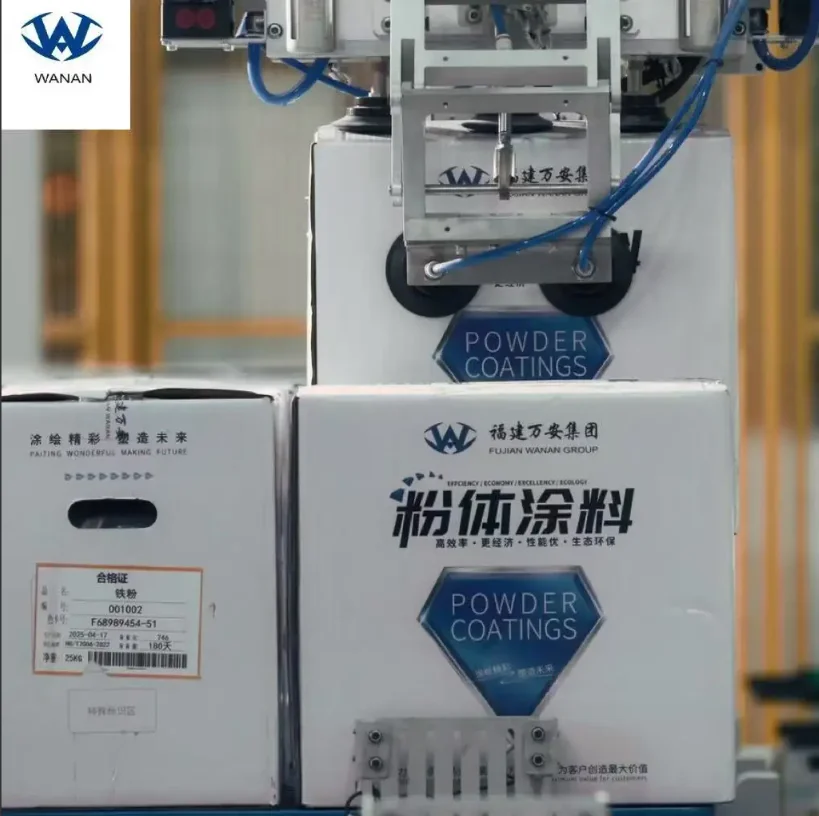
Minimum 200 kg per shade, packed 20 kg or 25 kg per box with an inner liner on export pallets, available with neutral or OEM labels for distributors and applicators. |
3-5 Day Delivery, 100% Response |
Standard grades leave about 3-5 days after payment is confirmed, excluding Chinese public holidays, and every inquiry is answered by a named contact with technical answers, not a price list. |
FAQs
Question |
Answer |
Which applications is plum matte used for? |
EV battery module housings and frames, transformer tanks and enclosures, kitchen cabinet fronts and automotive trim. The common requirement is a deep colour that has to match across large parts and long production windows. |
Why is a deep plum harder to control than a light colour? |
Pigment loading is higher, so small changes in film build or cure move the shade further. That is why the approval panel must be coated at production thickness and why each batch is compared with it before shipping. |
Can it be used on EV battery module housings? |
Yes, for housings, frames and brackets where the requirement is corrosion protection, mechanical toughness and appearance. If your application also needs dielectric performance, tell us the voltage and standard - that calls for a dedicated insulation grade rather than this finish. |
Is it suitable for transformer tanks and enclosures? |
Yes. Coverage at edges, recesses and weld seams is the deciding factor there, so we review the part geometry and set film build targets for it rather than quoting one figure for every part. |
What test data supports the grade? |
Salt spray 1000 h (GB/T 1771, creep under 2 mm), humidity 1000 h (GB/T 1740), weather 800 h (GB/T 1865), adhesion grade 0 (GB/T 9286), hardness 2H (ISO 15184), impact 50 kg.cm (GB/T 1732), bending 2 mm (GB/T 6742), cupping 7 mm (GB/T 9753). |
What are the MOQ, packing and lead time? |
200 kg per shade, packed 20 kg or 25 kg per box with an inner liner, palletized for export. Standard grades ship about 3-5 days after payment is confirmed; custom shades start after panel approval. |
Can we test before committing to a batch? |
Yes. Samples are available on request with freight paid by the buyer; run them on your own line, then order against the approved panel. |
Which certificates come with the product? |
ISO 9001, IATF, UL, QUALICOAT and IAF, with a CNAS-accredited in-house laboratory. The company also helped draft HG/T 2006-2022, the industry standard for thermosetting powder coatings. |
Plum Powder Coating: Keeping a Deep Shade Consistent on Large Parts
Deep colours are where coating specifications are actually tested. A light grey hides a half-step drift; plum does not, and on a battery module housing or a cabinet front that drift is what a customer sees first. This plum powder coating is a thermoset system applied electrostatically and cured by oven baking, supplied in 20 kg or 25 kg boxes with a 200 kg minimum per shade, tested to 1000 hours of salt spray, and produced against a retained panel rather than a shade name. A plum powder coating that is approved once and never referenced again will be argued about twice.
Why Deep Plum Is a Process Problem
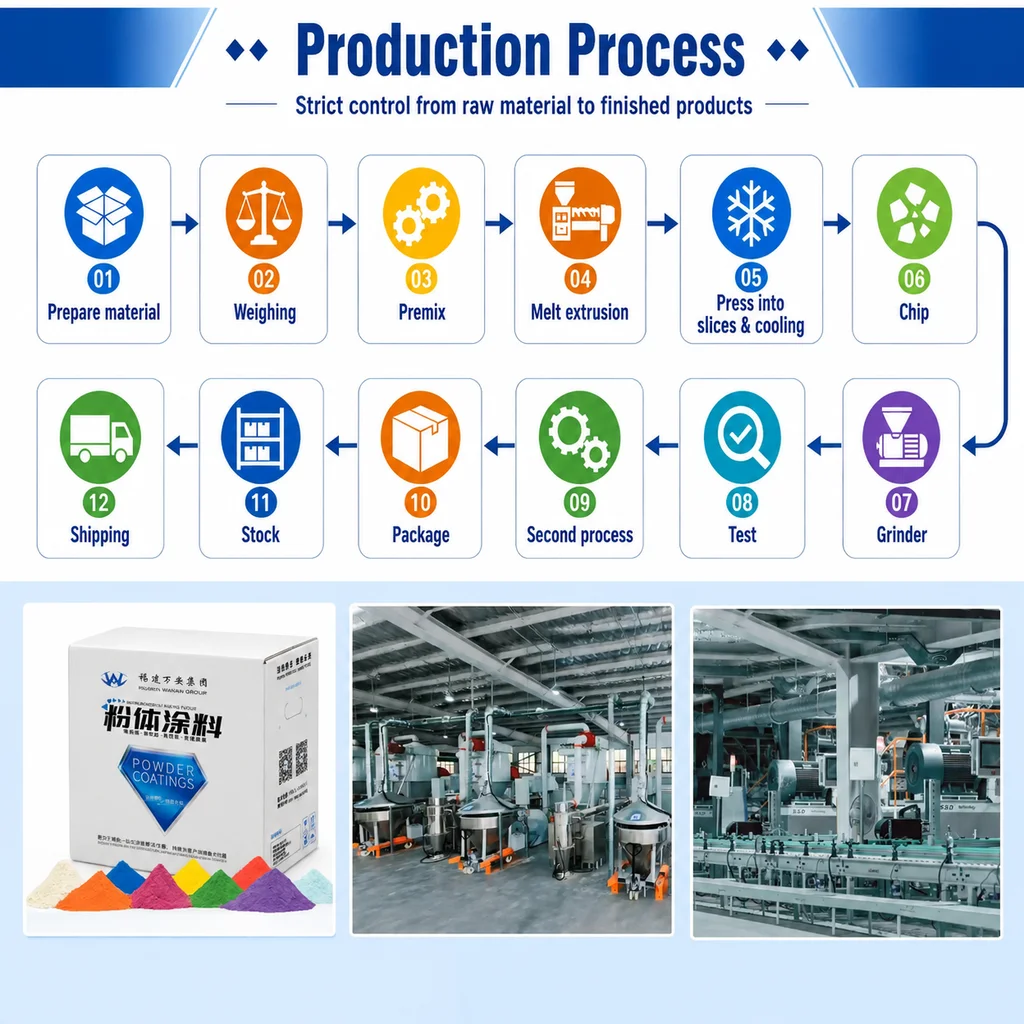
Three variables move a deep shade: pigment loading, film thickness and cure. Raise the film by 20 microns and a plum darkens visibly; under-cure it and the tone goes flat. That is why a plum powder coating cannot be approved on a lab panel or on a screen. It has to be coated at the thickness your line runs, cured in your oven, and then kept as the standard that every later batch is measured against - the single control that makes a deep colour repeatable. That is the difference between buying a plum powder coating and buying a colour name. A plum powder coating approved on a screen is an opinion, not a standard.
Three Parts, Three Failure Points
Battery module housings and frames: edges and cut-outs draw less powder, so a plum powder coating that looks even on a flat face can be thin exactly where water sits. Transformer tanks and enclosures: welded seams and internal corners are the first places corrosion starts, which makes gun access and grounding more important than sheen. Cabinet fronts and automotive trim: the surface is handled and formed, and impact resistance of 50 kg.cm or more with bending of 2 mm or less is what stops a chip from becoming a rust point on a visible face. One colour, three different ways to fail. Each is a reason a plum powder coating is specified part by part rather than from a colour card. Check them on first-off pieces, not on flat coupons of plum powder coating.
Data and Documents
Salt spray 1000 hours to GB/T 1771 with corrosion creep under 2 mm. Heat and humidity 1000 hours to GB/T 1740. Weather resistance 800 hours to GB/T 1865 with no blistering, cracking or spalling. Adhesion grade 0 to GB/T 9286, pencil hardness 2H to ISO 15184, impact 50 kg.cm or more to GB/T 1732, bending 2 mm or less to GB/T 6742, cupping 7 mm or more to GB/T 9753. Those results travel with the batch, and they matter commercially: an audit or a tender that asks for a plum powder coating with documented performance can be answered from the shipment file instead of a new test run. Numbers like these turn a plum powder coating from an aesthetic choice into a specified material.
What You Avoid
Sorting: deep-shade batches that drift get sorted by eye, and sorting a container is a week of labour. Re-approval: a customer who rejects one batch re-approves the next from scratch, which delays every order behind it. Claims: a chip at a module frame edge turns into a warranty conversation months later. A lot-traced plum powder coating removes the first, shortens the second, and gives you a document to answer the third. Sorting, re-approval and claims are the three costs a retained plum powder coating standard exists to remove.
Plant and Credentials
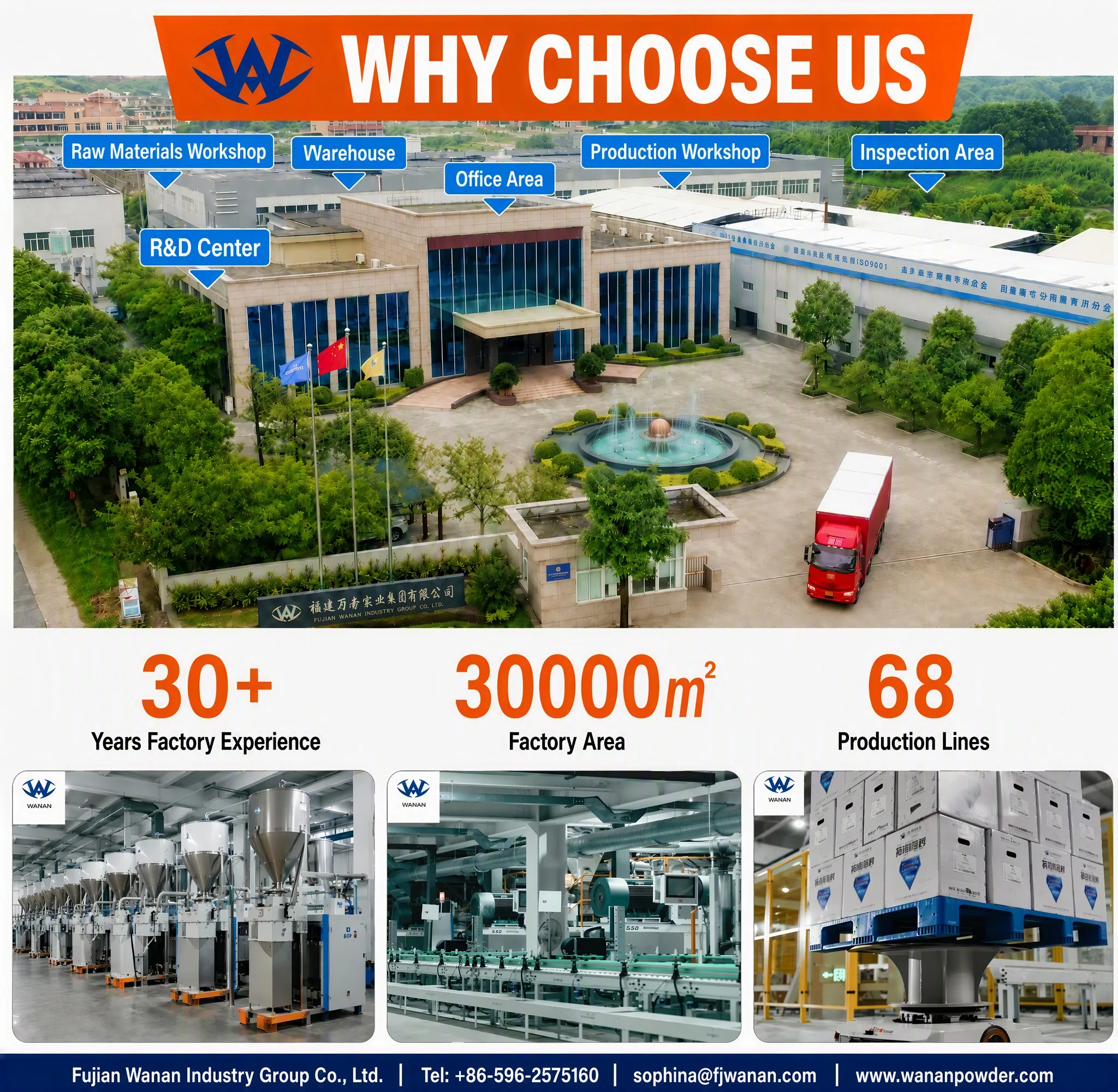
Wanan has produced thermosetting powder coatings since 1996, with production bases in Fujian, Guangdong, Zhejiang, Shandong, Henan and Cambodia, an in-house laboratory accredited by CNAS, and ISO 9001, IATF, UL, QUALICOAT and IAF certification. The company took part in drafting HG/T 2006-2022, the industry standard for thermosetting powder coatings. For a buyer, the practical value is simple: a plum powder coating order comes with traceable lots, current certificates and test data that can be checked before the container is loaded. It also means the plum powder coating you reorder in six months comes from a documented source.
Where It Fits in a Project
Plum is usually chosen for one of two reasons: a brand colour that has to appear on housings, cabinets and trim at the same time, or a deep neutral that makes a technical product look finished. Both reasons put the risk in the same place - consistency across parts made at different times, on different substrates, by different applicators. That is why a plum powder coating specification should name the retained panel, the lot record and the film thickness, not only the shade. A quotation should state the panel date.
Order Details
200 kg minimum per shade, 20 kg or 25 kg per box with an inner liner, palletized for export, neutral or OEM labels available. Standard grades ship about 3-5 days after payment is confirmed, excluding Chinese public holidays. Samples are available on request with freight paid by the buyer, and every inquiry is answered by a named contact. Send the shade, the part drawing and the film thickness you run, and the first reply will include a panel, the data and a line-by-line quotation. A first order of plum powder coating should be small enough to test and large enough to run, which is why the batch minimum sits at 200 kg rather than at a container. Settle the plum powder coating panel before the container, not after the first claim. A 200 kg trial settles more than a brochure about plum powder coating.